
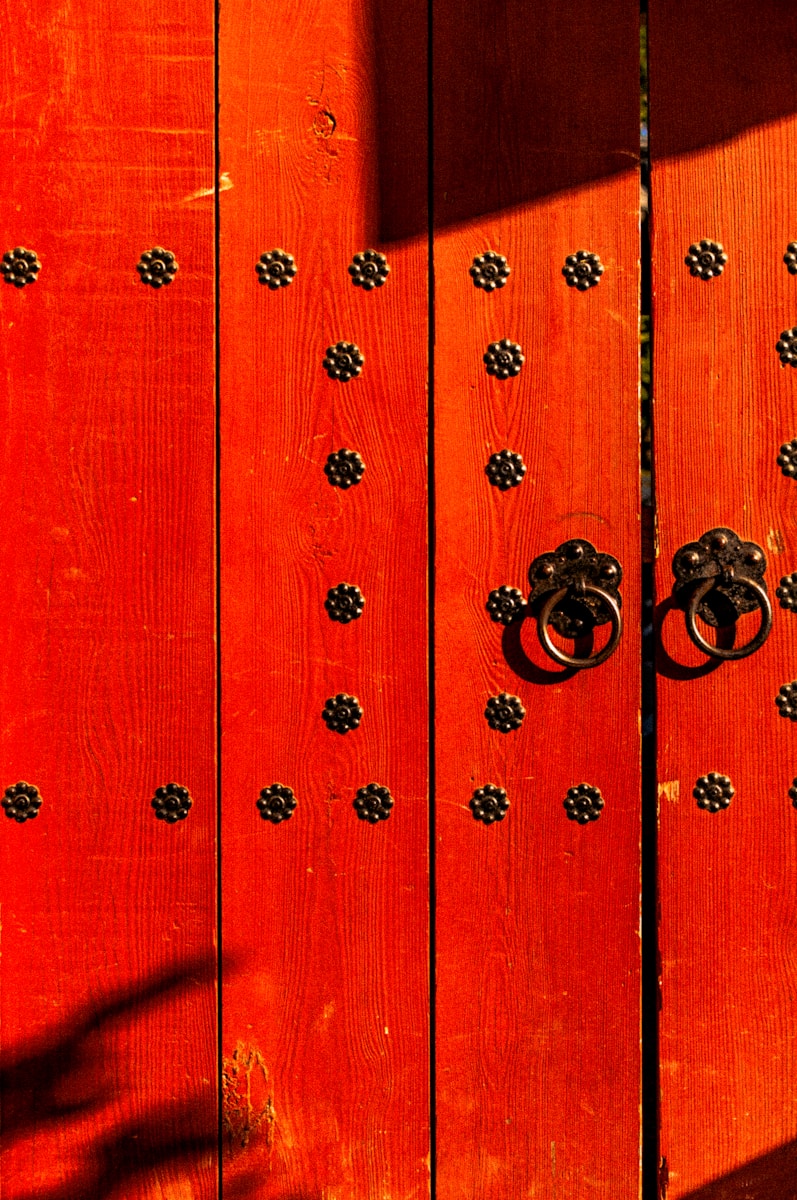
Orange always came to mind when Youngjoo thought of food. Orange, like the egg yolk crackling in a shimmer of oil, vivid against the pale morning light streaming into their halcyon kitchen alcove. She couldn’t explain why, but it felt as certain as the pink of her daughter’s ballet slippers or the white of the sketchbook pages sitting open on the counter. And so the decision was made: she would paint the new menu designs she’d been working hard on in this familiar orange shade.
In the background, the phone rang. It was the second time this morning, both calls from the Sunny Days Long-Term Care Home. The first time, she’d just woken up to the tail end of the knell. Now, she willingly ignored it, telling herself the egg would burn otherwise and that she’d call her mother back later, after she sent Sabrina to school.
Just then, her daughter emerged from the dim hallway, ballet slippers dangling from the straps of her backpack.
“It’s coming together so well, Mom,” Sabrina said, eying her mother’s sketches.
“Can you show me how to use Adobe Design after you get home from school?”
Sabrina laughed. “I keep forgetting you’re a dinosaur.”
“Hey, the least you can do in return for all the yummy food I make is let me pick your Gen Z brain.” Youngjoo playfully smacked her daughter across the head with a wooden spatula. “Now hurry and eat. You don’t want to miss the bus again.”
Sabrina scooped a ping-pong ball-sized clump of rice and dipped it into the seaweed soup Youngjoo had simmered for hours the night before. Various banchans1 crowded the dining table—a delicately fried egg, a plate of baechu-kimchi, and Grandma Gemma’s special Jang-jorim2.
Youngjoo returned to the kitchen island to pack her daughter’s dosirak3. Ballet day’s rhythm was a heavy breakfast, light lunch, and heavy dinner—a metaphorical sandwich. Today’s light lunch consisted of a fresh cherry tomato salad, apple slices and a steamed sweet potato.
“Crap, I’m going to be late.” Sabrina slurped down the rest of the soup and shot out of her chair.
“Did you remember to pack a change of socks?” Youngjoo said as she walked her daughter to the front door. “Want some more Band-Aids?”
Sabrina shook her head, shoving her feet into her sneakers. “Are you picking me up today, or is it Dad’s turn?”
“I’ll be there.”
Once Sabrina had safely boarded the bus, Youngjoo retreated into her familiar dance: clearing the table, scrubbing the last traces of the morning’s chaos from the stovetops, and sorting through the myriad of unopened mail scattered across the kitchen counter. She tore through the endless coupons and flyers, each one taunting her with enticing offers she had no use for.
Money had been especially tight since Sarah’s Korean Table began renovations a few months ago. The closure was Sarah’s doing, an outcome of a trip to New York that had infused her brain with ambitious new ideas. Her boss was convinced that the glamour of Manhattan’s food scene was the path to creating a name for herself, even if making way for up-and-coming culinary talent meant a demotion for Youngjoo to part-time cook. Thanks to Sarah accidentally finding some napkin doodles of hers crumpled in the trash, she’d since been tasked with designing the new menu. She knew it was a consolation prize, but it had turned out to be the best kind, reminding her of how much she’d missed creating art.
The phone rang again, causing her to drop the envelope in her hand. She sighed. Her mother’s nurse, Rebekah, was usually good at monitoring the number of phone calls her mother made to the house. She pushed the mail aside and answered it.
“Eomma4, I’m busy—”
“Mrs. Hong!”
Youngjoo pressed her ear closer. “Rebekah? Is everything okay?”
“Actually, it’s Gemma—”
“What happened?”
“We came into her room to give her her meds this morning, and she wasn’t in her bed. We can’t find her anywhere.”
She paused, trying to soothe the palpitations in her chest. “Are you saying she left the building?”
“I think so,” Rebekah said, clearly out of breath. “I have a team out on patrol right now. Would you like to come and wait for her here?”
She heard the rain pelting the roof’s slope like a steady drum. She couldn’t just sit around in a warm room, knowing her mother might be wandering around alone in this sluggish weather.
Youngjoo swiped the car keys off the table and said into the phone, “What good will that do? I’ll find her.”
The first place she checked was the restaurant. Her mother had visited almost daily before she got sick, but she wasn’t here now. The parking lot was deserted aside from the construction trucks and a homeless man digging through the garbage bins for leftovers.
She crafted a text message to Sabrina, her thumb hovering over the Send button. It wasn’t a good idea to get Sabrina involved, but the voices of detectives from all the crime documentaries she’d watched echoed through her mind. Every minute counted, and with each one, the chances of finding a missing person crept closer towards despair.
She pressed send. Did Grandma contact you by any chance?
The reply came almost instantly.
What?? No. Did something happen?
Youngjoo: Will you let me know if you hear from her?
Yeah, I will. But what’s going on?
Youngjoo: I’ll tell you later. No need to worry yet. Have a good day.
She roamed the streets for another hour, pressing her face against the car window any time she sensed a flicker of motion along the stretch of urban houses and wooden picket fences. As she approached a crosswalk, a young mother yanked her son back by his backpack, preventing him from lurching into the street. She paused to let them cross before she continued down the road; she was sweating, despite the chilly seven-degree air outside.
When her phone rang, somewhere between the restaurant and elementary school, the words tumbled out of her mouth like loose marbles. “Eomma, is that you?”
A voice she didn’t recognize fluttered through her ear instead. “Hi, this is Gwen. My family and I live at 155 Paddock Drive. I saw your number on your mother’s bracelet.”
“She’s there? Is she okay?”
“Yes, she’s fine. I found her pacing the front of our house, so I invited her inside. I think she forgot she doesn’t live here anymore.”
“She’s sick.” Youngjoo leaned her forehead against the steering wheel and closed her eyes, breathing a sigh of relief. “Thank you so much. I’ll be right there.”
Immediately flicking on her blinkers, she made a U-turn.
Even though she’d moved out at seventeen to attend college in her birth country, she still remembered the curves and lumps of this street, the sharp turn into the row of pebbled townhouses, their roofs angular and white.
Some things were new, like the Tesla Supercharger station that caressed the two guest parking slots, but not so much that she couldn’t recognize her old home. She was forty now, driving a vehicle she owned, no longer a child frollicking across her parents’ backseat.
She jumped out of the car as soon as the tires stopped rolling. The front door was wide open, and a Caucasian lady with a crown of curly blond hair and emerald-blue eyes stood waiting.
“Wow, you got here so fast,” Gwen said. “Come in, come in. It’s nice to meet you.”
“I’m so sorry about this,” Youngjoo said, kicking off her boots.
“Don’t be! She’s waiting for you in the living room.”
Youngjoo nearly tripped over her own feet as she zipped through her old hallway.
Her mother sat on a velvet sofa, wrapped in a checkered blanket. Her grey, curly hair was a wild tangle of thick knots, jutting out from her head like horns on a goat.
Youngjoo flung her arms around her mother’s brittle body. She lifted the blanket and pulled back the sleeves of her mother’s hospital gown, scanning for bruises, scratches, anything that looked out of the ordinary. “What are you doing here?”
“Your Appa5 goes to work late today, remember?” Gemma smiled. “We have breakfast as a family.”
“Eomma, we don’t live here anymore.”
“What did you do to it?” Gemma pointed at Gwen’s electric fireplace, which flaunted a matte black finish and LED touch-screen. She thought back to when it had been pure wood. A cozy, earthy corner nook where she and her mother had curled up together on chilly winter mornings. It was her favourite part of the house.
“We renovated the house a few years ago,” said Gwen as she came out of the bathroom.
“It looks great,” Youngjoo reassured her, though her heart stung knowing that such a fond part of her memory was obsolete.
“Listen, I have to get going to my hair appointment,” Gwen said, tapping her Apple watch. “You guys are welcome to stay for as long as you need.”
“Thank you so much,” Youngjoo said. “How can I lock the front door?”
“Oh, just close it, and you’re good. We leave it unlocked all the time.”
Youngjoo frowned, grappling with the absurdity as Gwen’s car thundered out of the garage, shaking the house.
“Youngjoo, dear, put back our pictures. And take down these ugly paintings,” Gemma barked, pointing to a Warhol-style Campbell’s Soup print that hung from one wall. Another wall featured photographs of Gwen’s family in various stages of sun-kissed, effortless joy. Youngjoo ran her fingers against the tiny paint bubbles, picturing the soft butter-yellow walls buried beneath these strangers’ layers, still hugging the house that was once theirs.
Following her mother into the kitchen, she paused to take it all in. The old chestnut wood was gone, replaced by a smooth expanse of white marble that twinkled too bright for her eyes. A shiny golden bar cart stood watch beside a Smart refrigerator, its snazzy surface mirroring the kitchen’s rebirth. The cooking splatter and tiny flecks of red pepper flakes that once stained the backsplash were wiped clean, as though they had never existed at all.
Gemma scanned the kitchen. “Did your Appa already leave?”
“I guess so.”
Precisely seven years and four months ago, around 11:30 p.m. A drunk driver flying down the wrong side of the road had struck her father’s car and killed him instantly. But she didn’t say these words out loud. Trying to correct her mother’s deteriorating memory would only aggravate her.
“What do you want for lunch today?” Gemma asked, tugging the pantry cabinets open. “You don’t like when I pack you kimchi fried rice because the kids at school say it smells bad.”
Youngjoo had forgotten all about that. Kids were so open-minded now, Sabrina didn’t need to feel self-conscious about bringing kimchi or barley tea to school. In fact, she often came home and bragged about how popular her dosirak had been among her classmates.
“That’s okay, Eomma,” Youngjoo said. “I can buy lunch today.”
“Waste of money,” Gemma snapped. “I teach you better than that.”
She sputtered around the kitchen, prying various grocery items from the shelves — a bag of flour, chia seeds, boxed mac & cheese, gluten-free pancake mix, rainbow-coloured pasta noodles, and more stuff an Asian household would never have. “Where is all our stuff? This is not mine!”
“I thought the rainbow pasta noodles would…look pretty in our new bowls.”
“Our bowls?” Gemma slammed the pantry door shut. “It’s always we, our us.”
“What?”
“Some things are just mine. I used to have lots of stuff. Like you.”
Youngjoo searched her mother’s eyes, but they darted around the room, wild and disconnected, like her fragmented speech. “Okay, calm down. I’ll put everything back.”
“When?”
“I don’t know.” Youngjoo looked away as she answered. “Tomorrow.”
“Lie. You’re always busy. Always far away.”
“I am busy. Yet, I still visit you three times a week,” she snapped.
She knew it wasn’t fair to blame her mother for anything that came out of her mouth when she was only partly herself. But the illness had amplified her mother’s existing qualities, not summoned entirely new ones. Even when her memory had been intact, she’d been highly critical of Youngjoo and way too needy for a grown woman. She’d called every other day to complain about their lack of quality time together, insisting they take more trips with Sabrina. Their conversations had always followed the same script: Youngjoo would say, “Sure, Eomma, never mind that my marriage is falling apart or that I’m barely managing to put food on the table, let’s go to the Bahamas! I’m sure that’ll fix everything.” After a beat, her mother would reply with a simple, infuriating, “Yes”. Nothing more. No elaboration or a sliver of guilt. It still drove Youngjoo mad thinking about it now.
Gemma threw a bag of chia seeds to the ground. They ruptured on contact, seeds gushing onto Gwen’s pearly white tiles.
Youngjoo hurried to her mother’s side. “Please don’t do this here.”
“Don’t get rid of my stuff,” Gemma said, her eyes welling with tears. “It’s all I have.”
“What are you talking about? You have me. And Sabrina.”
The truth is, if she had three free hours in her schedule and she spent them visiting her mother at the nursing home, she went to sleep that evening feeling pretty good about herself. It was easy to dismiss the remaining hours in a day, as taking care of Sabrina, cooking at the restaurant, and more recently, working on the menu art kept her plenty occupied. But when she pictured her mother waiting for her, alone inside a dark hospital room as multiple days crawled by, she felt disgusted with herself. Ridiculous. Childish. Embarrassed that she had let herself get excited about a new art project.
Youngjoo poked her head into Gwen’s refrigerator, searching for anything her mother might recognize. Thankfully, there was a half-empty tub of gochujang6 near the back of the second shelf. Raising the tub in the air, she shrieked, “Look!”
“Good, I need it for kimchi fried rice,” said Gemma, the redness in her neck beginning to subside.
“I don’t think we have any spam, though.”
Gemma grumbled, “Fine, I make sandwich.”
While her mother assembled the sandwich, Youngjoo scooped up the stray chia seeds and dumped them in the trash bin. She caught herself sneaking glances at her mother. Surely her mother must have made her hundreds of packed lunches in this kitchen, yet it felt like the first time she was seeing it with her own eyes, truly registering and appreciating the labour of love from the perspective of a receiver. Her mother’s hunched back, and her hands—hands that were more vein than skin—gave the butter knife in her fingers the illusion of a butcher knife.
Suddenly, Gemma sank onto the floor, her face a pallid shade. The butter knife clattered on the footstep next to her.
“Are you okay?” Youngjoo rushed to her side.
“I want to sleep,” Gemma slurred.
“I’ll take you home.”
“We’re not home?”
Youngjoo looked around her, at the pastel-coloured dishcloths that hung from the oven doors, the bunch of dried sunflowers lying horizontal on the windowsill. Her family hated sunflowers.
Youngjoo carried her mother to the car and returned alone.
The sandwich her mother had made was sitting on the cutting board. Messy tomato chunks dotted Gwen’s countertops, giving them a bloody-like appearance. Youngjoo squished the sandwich into a Tupperware container and rinsed the dirty utensils, hesitating before sliding them into drawers that felt unfamiliar. On her way out, she placed a fifty-dollar bill on the console table and scribbled a note: Thank you very much for your hospitality, Gwen. You have a beautiful home.
She drank in the details of the house one last time, her eyes lingering on the staircase that led up to her old bedroom. It was only a few steps away, practically calling to her. But she couldn’t do it. Was it really her bedroom if it didn’t have her bookshelves, her embarrassingly rich plushie collection, or her elaborate patchwork of Grease movie posters? The house she loved was not a perennial landmark like Big Ben or the Eiffel Tower. At the end of the day, a house was just wood and cement and brick. What she longed for was the smell, the worn artifacts, the people—especially the people. A childhood home was a fusion of a bygone time and all the big and little things that mattered only to those who’d directly experienced them. Youth was the only key to its door, and nothing other than reversed time could fix her a spare.
In the car, Youngjoo withdrew her sketchbook from her bag, the motion tugging a bunch of napkins out with it. They landed in a soft heap on her lap.
Her mother was fast asleep in the passenger seat, head nodding to one side, chest rising and falling with each delicate breath. Youngjoo reached over and traced her finger along the grooves of wrinkles etched around her eyes.
Gemma stirred awake. “Ji-hoon?”
Youngjoo’s throat tightened. “It’s just me.”
Gemma’s eyes pooled with disappointment, and something else. Her mother’s eyes closed before she could fully decipher it.
Swallowing the golfball that had lodged inside her throat, she returned the sketchbook to her bag and ironed out one of the napkins with the heat of her palm.
Sabrina was standing in front of the nursing home when they pulled into the lot.
“Mom!” Sabrina ran towards the car.
“What are you doing here?” Youngjoo leaned her head out the car window. “It’s the middle of the school day.”
“You can’t seriously expect me to focus on Trig when you send me a text like that.” Sabrina crossed her arms across her chest. “Is Grandma okay?”
“She’s fine.”
“Then what’s wrong?”
“What do you mean?”
“I don’t know, you look kind of sad, Mom.”
Youngjoo swiped the skin underneath her eyes. “It’s been a crazy morning.”
“Well, tell me how I can help.”
She smiled. “Can you go inside and get Rebekah, please?”
Meanwhile, Youngjoo walked to the passenger side and unbuckled her mother’s seatbelt, kneeling to meet her at eye level. Water soaked through the knee of her jeans, though the rain had stopped some time ago.
Gemma’s eyes shot open. “Where am I?” A brief look of fear flashed through her eyes.
“Don’t worry, you’re safe,” Youngjoo said, stroking the back of her mother’s head.
“Did you enjoy your lunch?”
“It was delicious,” Youngjoo said, kissing her mother’s knuckles. “Thank you for always making me lunch.”
“You’re welcome, Youngjoo.”
“I have a present for you. Rebekah won’t mind since it’s small.” Youngjoo pressed a napkin into her mother’s palm. “Whenever you miss home, look at this.”
She had sketched it in Gwen’s driveway: a small house, the shade of bamboo, sitting against the slope of a hill; large brown onggi7 jars and a vegetable garden lining the front yard; and large, luscious gingko trees looming in the background. Youngjoo had never visited the house during her collegiate years in Korea, but her mother’s resplendent descriptions—every special nook and cranny, even the clump of grass that poked through a crack in the floorboard—wove a tapestry so rich that Youngjoo felt she’d lived there too.
Tiffany Kim is a Korean-Canadian writer based in Toronto. She manages pharmaceutical programs for medical publications such as The Medical Post, Pharmacy Practice + Business, and more. She is currently pursuing a Certificate in Creative Writing at the University of Toronto. Her short stories and screenplays, often driven by female protagonists, aim to examine the shifting boundaries between self and the external world. Her work has been featured in Low Hanging Fruit and children’s anthologies, and she also runs a writing blog.
- In Korean cuisine, banchan refers to small side dishes served alongside the main course, intended to complement and balance the meal. ↩︎
- Jang-jorim is a popular Korean side dish consisting of lean beef braised in soy sauce and often boiled eggs or quail eggs. ↩︎
- Dosirak refers to a packed meal, often a lunchbox containing an assortment of food or side dishes. ↩︎
- In Korean, “eomma” is an informal term used to refer to one’s mother. ↩︎
- In Korean, “appa” is an informal term used to refer to one’s father. ↩︎
- Gochujang, otherwise known as red chili paste, is one of the most common ingredients used in Korean cooking. For example, the sauce that goes in Bibimbap. ↩︎
- Onggi is an earthenware Korean folk pottery typically used as clay jars to store soy sauce, soybean paste, and fermented kimchi. They have been around for thousands of years and serve as an important symbol of the traditional Korean lifestyle. ↩︎