
They are sitting in Denny’s, Henry and his wife Janet. Orange Formica as far as the eye can see. Henry wonders if it comes from some vast bottomless quarry. Forty-five years of marriage and he still can’t understand Janet’s passion for Denny’s. They sit silently on the orange vinyl banquettes, she smoking, back when you could smoke anywhere indoors, he staring at his hands clasped on the table. His hands, once covered with coarse black hairs, now sprout white, frightened-looking filaments. When they appeared one day, fully grown, and clustered near his watchband, lying nonchalantly among the others—alien immigrants, unbidden and unwelcome—he was not yet fifty. He considered them harbingers of decay.
“I’d like the Grand Slam Breakfast with extra bacon,” Janet says.
Henry considers the menu.
“Just coffee.”
Breakfast is Janet’s favorite meal of the day. Sleep—even the smallest nap—gives her an appetite. Henry wakes slowly, always slightly nauseous, and cannot eat until his stomach settles—usually not before two in the afternoon.
The time they went on the Windjammer cruise, Janet would leave Henry still lying in bed, and hurry to the first breakfast sitting. Later, in the afternoon, in the full blaze of a busy day, Janet would be seized by somnolence as profound as if she had taken a soporific and, his entreaties notwithstanding, she would pass the day on board, her head nodding over a book, while he tagged along with the other passengers on the excursions ashore. So it was that he swam alone in the hot sulphurous pools of La Soufriere while other couples snapped photos of each other, and ate lunch by himself in the Parrot’s Roost restaurant, and returned morosely to the ship to find her seated on the focsle reading and smoking her long white cigarettes.
One night, sitting with some of the other men around the chipped and thickly lacquered tables, the first mate interrupted him as he was talking about Janet, and asked in apparent amazement if he was married. Later, during the interminable analyses of their marriage, he would tell her this story. But the story never had the intended effect, although what effect he wanted he could not say. She ignored the reproach, which was perhaps the point after all.
“Did you call Bell South?” Janet asks, sliding her toast around the plate, mopping up the congealed yellow, polishing the china.
“Yes, they said the phones would be connected this week.”
“Whose name did you put it in?”
“Mine,” he says, holding her gaze.
“I see.”
Now that his mother is gone, the Florida condo is his, or theirs, as Janet would have it. He knows this hurts Janet, this singling out of possessions, this apportioning of assets, denying her a share. It is an old quarrel, one he is helpless to abandon.
Sunshine Village, Florida, a fenced community of ten thousand geriatrics. Henry had hated visiting his mother there. In his forties and fifties, he had felt young, vigorous and slightly guilty about his own good health among the old folk. Sitting at the pool, he was repulsed by the brazen parade of half-naked bodies passing by his beach chair like a tableau from an orthopedic textbook: a swollen knee, puckers of scar tissue from old operations, lipomas, keratomas, the whole rhyming liturgy of pathology.
While the women soaked their ample bodies in the warm water of the pools, the men preferred to gather on the bare concrete deck of the pool, drawing their lawn chairs into a circle—the size of which grew and shrunk and grew again as meal times and nap times succeeded each other—and shouted into the air, conversations as fragmented as their memories.
“Fefferman? He had the restaurant on Laurier.”
“No, you’re thinking of Foigleman!”
The loud ones who never shut up, the pale quiet ones who sat swathed in sweaters, white golf caps covering their thin scalps. For a few short years, his father had been among them.
Nevertheless, Henry had been glad to leave his veterinary practice for a little while in the depths of winter, glad to escape Vancouver’s interminable rainy season. A small-time landlord, owner of the modest shopping plaza that housed his clinic, Henry often arrived in the streaming cold downpour to find his roof overburdened, water pouring into the building. He would climb onto the roof, and thrust his hands into the freezing water searching for the clogged drainpipes, scooping out plugs of leaves and crow shit, his pants soaked, his shoes filled, his heart raging in the early morning winter gloom.
Indoors, in his clinic, the climate was often just as tempestuous. The walls echoed with incessant barking, hysterical howling, and hissed threats. He waded through the never-ending evacuations—the animals in his care veritable factories of effluvia—and tried to perform medical miracles, on time and on budget. Veterinary school, where Henry had found beauty in the logic and science of disease, had not prepared him for this. The years of study had left him unschooled in navigating the treacherous labyrinths of emotion driving his clients’ relationships to their dogs, their cats, their hamsters, their guinea pigs. As the years went by, Henry got better at this game of guessing the expectations of his clients, but he found the effort wearing, the repercussions of failure too exhausting.
At home, Janet had early on ceased to listen to his furious ranting about the internecine office wars, or the ungrateful clients who dragged him from his home regardless of day or time. Nor could she feel his fear when he attempted procedures beyond his skills, or when animals in his care died unexpectedly, and he faced his clients abject and humiliated and flayed by their wrath. When such calamities occurred, he was unable to sleep for weeks afterward until the depression and sense of despair and failure wore off.
Janet busied herself with the children and found project after project— sewing sequins on the girls’ costumes for their dance recitals, cooking latkes for the kids’ gentile classmates at Chanukah. Each new project kept her busy and away from Henry. Any attempt to entice her to join him was rebuffed, and he began to wonder if Janet was having an affair but he was never able to find the slightest evidence for it. She disdained skiing, tennis—even walking was an imposition—and liked nothing so much as sitting at home doing her projects. In time, he began to take vacations without Janet, with friends, single mostly—hiking in the wilder mountains of the Coast, and even to other countries, to the Andes and Nepal. People wondered at their relationship, no one more than Henry.
It was Janet’s idea to go to Florida, to Sunshine Village for the whole winter now that he was retired. They did that last year, escaping from the dark weeping winters of Vancouver. In April, they returned, and Janet filled her friends in on the experience.
“We love it. There’s nothing to do but sit around the pool and read.”
She described the trip in glowing terms, upbeat, refusing to acknowledge what Henry was sure all their friends knew—that Sunshine Village was the poor-man’s version of a Florida country club. Henry listened to her, and to the polite, enthusiastic rejoinders from her friends, co-conspirators in the charade, and was capable only of, “Yeah, it was great,” in the manner they all accepted as “typical of Henry” while they dismissed him with an indulgent smile and a wave of their ring-sparkled fingers.
Henry chafed with the stultifying boredom of the gated streets, felt like a kenneled dog. Janet spent the days oiled and prone in the sun reading a few paragraphs of P.D. James between naps.
“You are an adept at immobility,” Henry once ventured.
“Fuck off.”
“No, really. You should write a book—One Hundred Ways to go on Vacation While Lying Down.”
“Look Henry,” reaching for her pack of cigarettes. “I ran around enough when the kids were little. Now I’m going to do what I want to do…Ok?”
But Henry knows that Janet does really like it here in Sunshine Village, the mild weather, the ritualistic chats about children and grandchildren, the forays to the Fashion Mall in Boca. She is, he notes, universally liked. The easy accepting ways of her small-town Prairie childhood have never left her, not even in the face of Henry’s relentless assaults on her equanimity. Janet does not sulk or brood over Henry’s jibes, leaving that business to him.
“You ready? Henry asks.
“Sure, why not.” she says, stubbing her just-lit cigarette into the ashtray, angry at Henry’s impatience.
“I need to go to the bathroom first.”
Janet slides along the vinyl banquette, her white tennis shoes appearing first in the aisle and then the black spandex tights she likes to wear. She has grown broader but is not distressed by it, or not so Henry could see. With the helmet of teased hair that caps Janet’s head gone from his field of view, Henry can now see the other diners in the booths behind Janet.
A table of kids—the boys in baggy sweats, baseball caps skewed sideways on their heads, reminding Henry of one-horned cattle—the girls, soft mammary plumpness spilling out of tight tops, equally bovine. Next to the teens sits a young mother, her profile visible to Henry. Her fingers, slim, lightly freckled, replace a lock of red hair behind her ears as she bends over her child. Henry sees the auburn fuzz at her temples, her fine-veined skin. He is transfixed by the smooth junction of her jaw and long neck. Could it be her? No—she would no longer be that young. How would she look now? The last time he had seen Molly, she was not yet thirty. What kind of mother would she have become? Custard colored food spots the baby’s lips. The young woman moistens a napkin with the tip of her tongue and Henry feels his heart contract, a clenched fist, remembers her tongue on his own, the sweet taste of her saliva.
“Oh God, I haven’t thought about this for so long.” There was a shift then—has it been twenty-five years, already? The world had tilted and his life had spun so eccentrically after that the old wounds had simply slipped away. Henry cannot take his eyes from the young red-haired woman. She turns and her eyes meet Henry’s, surprised to find this man staring at her and she smiles showing even white teeth and Henry tries to return the smile but is aware that the grimace on his face is a poor facsimile. His heart is racing. He pays quickly and waits for Janet in the car.
Heading south, angling down from Vancouver to Florida, they drive through flat, brown country like the Prairies where Janet was raised. They had met at the University of Saskatchewan, Janet as sunny and open as the land itself, and when veterinary school ended, Henry had asked her to leave with him, to go back over the mountains to the Coast. The drive through the Rockies, through Banff and Jasper, they planned babies and dreamed about his career and how everything could start now that he had all those years of dogged study behind him.
Throughout eastern Washington, the wind buffets the Camry. Henry imagines the paint being blasted off the car.
“I couldn’t live here,” he says. “Could you?”
“Yeah, I think I could.”
“Why?”
“I like the sky.”
To Henry, the sky seems to loom overhead like a low ceiling. He feels his neck muscles tensing, as if he is going to bump his head at any moment. The vaunted prairie sunsets are absent today. The sky is hidden by clouds of blowing soil. Clumps of matte-green Sage cluster in the eroding gravel. There are no trees. The only vertical objects rising above the flat plain are telephone poles that ultimately give way to franchise beacons, glowing green, red and orange. They reach a town at the confluence of two silt-filled rivers. In the Sandy Shores Motel, Henry surfs the channels waiting for Janet to shower. She comes out wearing only her G-string panties and begins to rummage through her small bag of lotions and an array of vibrators. He manages to perform that night, a task growing more difficult each year. Afterwards, he turns to the wall.
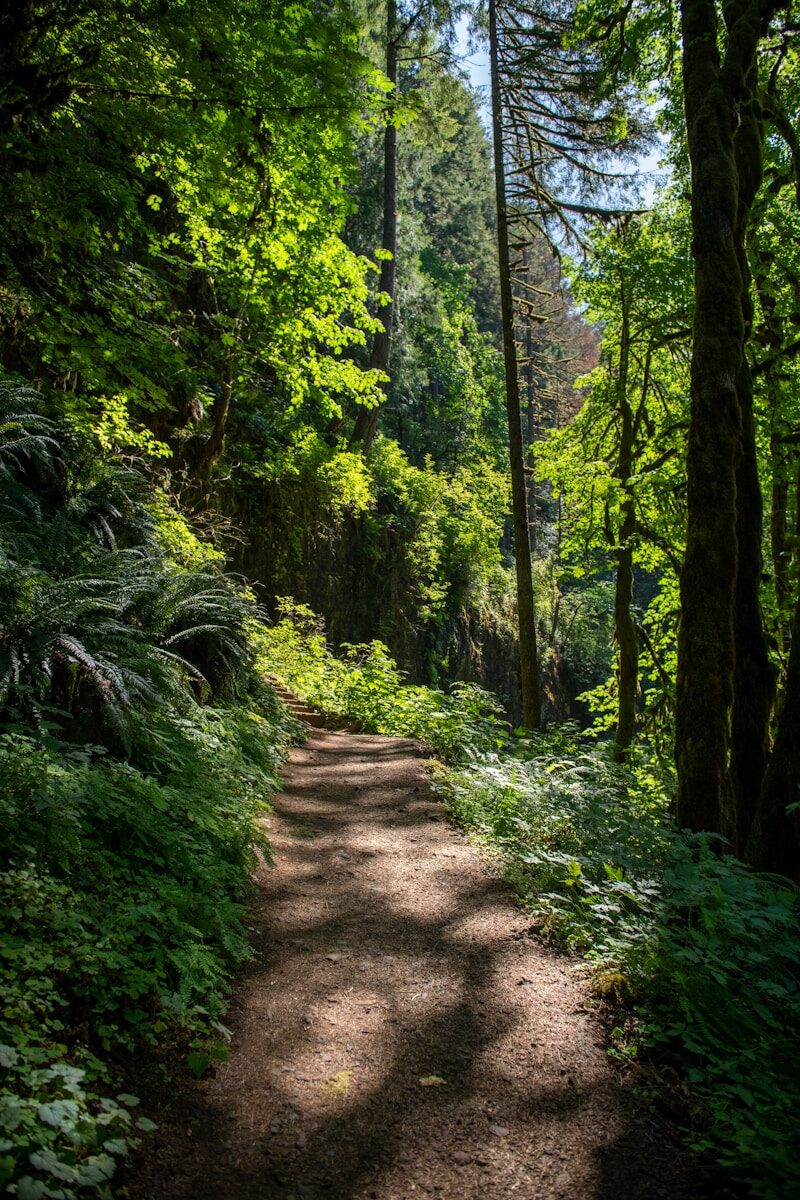
How long had it lasted? A scant four months, perhaps. It had begun in the spring, snow still clinging to the ground at the higher elevations. Alder trees were shedding catkins on the forest floor. Janet had been elected to head the city’s Hadassah organization and was rarely home weekends and evenings. When she was home, she was too tired to go out. She locked herself downstairs in her office surrounded by a storm of Hadassah correspondence and projects. Henry would take his Golden Retriever and hike the trails that snaked through the forests covering the mountainsides looming over the residential streets on the North Shore, the cedars often wreathed in mist. He walked and tried to appease his restlessness and loneliness, and he wondered if all marriages made you feel like this.
One day, he pushed on farther than he ever had, up the trail beside a creek he had not explored before. After an hour of uphill walking, he climbed into the shallow creek bed and onto one of the boulders that filled the sunny middle and lay in its warm smooth hollow. He dozed for a while and was awakened by the sound of dogs barking, and saw his retriever urging a red-haired woman to throw a stick into the water, a game in which the woman seemed to take as much delight as the dog. Henry approached her and they engaged in the small talk dog owners make and discovered they were going the same way. At the parking lot, his heart beating fast and his breathing constricted, Henry asked her if she would like to walk again sometime. She said she often came in the late afternoon, and maybe they would meet again.
The following day, he left work early and waited in the parking lot at the trailhead hoping he hadn’t missed her. They walked together for hours, until the sun hit the treetops, and lit the spray off the creek, their shoulders touching now and then. Later he could not remember what they’d said—only that he wanted to be with her.
In the coming weeks, they walked the muddy root-clotted trails, chilled fingers intertwined. The tall cedar forest sheltered them from prying eyes. They embraced often. The dogs seemed to mirror their happiness and exulted in racing through the ferns and moss, plunging into the creeks swollen with snow melt and, on the way home, the truck was filled with their wet smell. In the days of March, April and May, Henry and Molly walked through the quiet valley and avoided planning more than a day ahead. In the lengthening evenings, they drew the curtains in Molly’s basement suite shutting out the sounds of the lawnmowers and busy neighbors. Meager though her furnishings were, Henry regarded each object with awe and gratitude: the dog-bit sofa where they nestled, the pallet on the floor where he lay with her, and he marveled at the joy he had not felt in so long. By June, it was over. Such a short time—the reproductive life of a housefly, Henry later thought.
Henry awakes with the acrid sting of burning tobacco in his nose. Janet is up, and unable to wait for him, has already used the room’s coffee maker. Spread out before her, on the table facing the mirror are the powders, tubes, sprays and application devices he has seen her use every morning.
“I made you some coffee,” Janet says, hands poised over her hair, eyes squinting from the smoke.
Back on the road, the strip of hotels and family restaurants ends abruptly at the edge of town and they pass through an industrial zone where balers and tractors, painted bright blue and yellow, line the highway, and then open land again, fenced-off acres of feedlots, steaming corrals with hills of manure giving up their heat to the air. The steers cluster around the troughs, butting each other in the flanks for better position, or just to make a point. They bellow, and chew, and drool, and Henry can almost feel the warm, wet muzzles in his hands even though he has not practiced on cattle for forty years. He knows that pretty soon they will come to a junction, and there, in some old converted home or storefront, will stand a veterinary hospital. Although he has never been through here, he knows, as a migrating duck knows where the lakes are, that he will see one. And when he does, he will quickly and instinctively evaluate the building, the parking lot, getting an idea of how prosperous the practice might be, trying to ward off envy. Even now, at this late date, officially retired, he cannot help comparing himself to others. Through the brown, flat, windblown terrain Henry drives on cruise control, his mind still on the cows and his profession. There was only one time he felt free of this competitiveness and jealousy—after he met Molly, in the first wonderment. Then, his business anxieties seemed too trivial to matter, and he wondered why he had ever been bothered by such concerns.
By one in the afternoon, they can see foothills in the distance and beyond them the sharp outlines of the Rockies. A green forest service sign advertises, “Painted Canyon 18 miles west,” over the icon of a hiker, a little stick person wearing a backpack and carrying a staff.
“How about we check it out, maybe have a little picnic over there?”
“Sure,” Janet says.
A large map at the site informs them that there is a choice of trails, from a one-mile loop around a pond to longer treks that end ambiguously in an intense swirl of topographic lines. Henry is drawn to the longer dotted lines marking the trails on the map, tries to imagine the terrain, walking it with his mind. Here, out of the rain forest he is used to, the air seems promiscuously clear. Golden pine needles cover the floor in this dry place and slide like silk under their feet. There is no question of attempting the long hikes. Henry knows that even to mention this would trigger the long-running argument, his unrequited yearning for the pleasures of a challenging hike, her adamant refusal to take part. It would poison the day. So they sit and eat their cheese and bread and Janet drinks her diet Dr. Pepper at a picnic table under a Ponderosa pine near the parking lot. After, they walk the short loop and Janet takes Henry’s hand, and he allows her to do so for a moment, but drops it as soon as he can.
Molly knew all the trails, knew that at the end of this street of stuccoed houses, of green mossy lawns and overgrown Junipers, lay an old trail leading into the forest. Deep in the forests, she knew where all the intersecting paths went. They climbed steep ridges, sat by creeks yellow with rushing spring run-off, watched the dogs fight over sticks. She led, her short red hair guiding him like a beacon through the shadows of the dense forest. Her legs, strong, straight and muscular never faltered. He labored to keep up, to make himself keep up and to outdo her, to prove the twenty-four-year age difference was a trivial thing. Once, he led the way across a creek. He splashed off the first rock, green and slippery as mucus, fell in up to his knees and then continued the same slipping, falling, ankle-bending farce while her laughter rang out, clear, high and with such delight that he would gladly have kept slipping and falling for her enjoyment the rest of his days. Sometimes, as they walked the narrow paths between the giant cedars, she would come up behind him, put her arms around his waist, lay her head on his back, and softly run her hands over his belly.
He lost weight, recovering some of his youthful silhouette. The longer days meant he could be away from home until late at night. Henry anticipated questions, slit-eyed interrogations, but his comings and goings stirred no interest, deranged no one in the house. Janet seemed content sitting in front of her computer screen, a clogged ashtray by her side. Henry figured she was pleased that he was no longer demanding she join him, that his critical attention was focused elsewhere, that she was left alone.
Two nights later they are in the Sangre de Cristos Mountains of New Mexico. They stop at the Purple Mesa Motel. The solitary window in their room looks out over the parking lot and the Saguaro cactus beyond, their arms raised like warning sentries. By nine o’clock they have returned from dinner and have nothing else to do but turn in. Henry picks the bed nearest the door. A loud group passes by, their laughing voices clear, a woman, several men. Deep bass notes from the live band in the bar drift through the walls. It is Saturday night and the sound of the revelry of others depresses Henry.
“Any visitors allowed?” Janet asks.
“Here she comes again,” he thinks. Janet lifts his covers and slides in.
After, he is grateful that she returns to her bed. He pulls the blankets up to his chin, fastidious as always, trying to avoid contact with any of the bedding but the sheets, imagining others copulating on this bed. He falls asleep disturbed by Janet’s resurgence of passion on this trip.
It was only a matter of time. Henry had shed clues like a dog sheds hair, casually and untidily.
“You’re pond scum,” Janet had hurled at him.
She threw his clothes out of the bedroom closet and into the hallway.
“I want the kids to see what a bastard their father is.”
She insisted he sleep in the guest bedroom while she kept the marital bed to herself and refit it with new bedspreads and added new pillows and made it into her boudoir from which he was banished. Yet he remembered her plea when she first learned about Molly—her anguished, “Please don’t leave me,” never to be repeated.
She did not take to her bed prostrate and helpless. In this too, they were unlike each other. One night she called through his bedroom door, “I should have one point five mil,” allocating to herself half the rewards of his servitude. “Fuck you too,” he whispered at the closed door.
They agreed to visit a marriage counselor. For two hours once a week, they vied for the position of most aggrieved. They argued their cases before Judy, a dental technician turned therapist. Janet quickly claimed the moral high ground. A sin of commission—his infidelity—outweighed her sin of omission—her emotional unavailability.
As for his claim of loneliness—he wept openly at his pathetic need to have to beg for companionship—Janet revealed that she had been avoiding his company for years because he was so abusive to her.
“What… What are you talking about? What abuse exactly?”
The list was long:
“Henry—you’re no fun to be around—your constant sarcasm and fault finding—your brooding—your angry tirades.”
Abuse became the touchstone around which their relationship revolved. Judy, the dental technician/therapist, offered to see him alone so that they could discuss anger management.
And so the underpinnings of his grief dissolved, not sufficient to forgive his straying, the heartless actions of a narcissist. He lost the right to be angry. He lost the woman with the red hair, and he lost the narrative of his life, which, he was told, now had to be reviewed through another set of eyes.
She claimed she had always loved him, had always desired nothing more than his companionship, that his loneliness was self imposed, some trivial misunderstanding on his part. And she clocked his every move.
He no longer had to ask for sex. Now, she was demanding it.
“I’ve decided to confront my sexual needs,” she told Judy, their counselor.
What had prevented her in the past, he wondered. For the last twenty years, he had had to plan each sexual approach carefully, risking frequent rebuffs, lying in bed seething with longing while she snored complacently. Now she had become insatiable. Alongside the tracts written by feminist gurus, she now accumulated sex manuals, and various sex toys. He was exhausted both by her sexual demands and by the will it took to participate.
“Why now, God… why now?”
But Molly was gone. Still in town, maddeningly close, yet unavailable to him. It was over. She had left her job, moved to another apartment, and changed her phone number. He never saw her again.
“She’s moved on, got on with her life,” he told himself. Like Janet, she shared this aspiration, this “getting on with my life” that, they both claimed, he was instrumental in defeating.
“But, how will I get on with my life?”
With time, Janet’s newfound passion for sex and exercise waned to pre-Molly levels. Resignation characterized their relationship, neither had the strength to reenter the turbulent landscape of change. Romance was for the young.
Slowly, Molly became an irretrievable part of the greater losses of his life—his father, his mother, the sister who had died before Henry was born. Just as men of his age feel the desire to run, or throw a football, only as a memory, lucid but not urgent, so too did his recollections of Molly weaken. He could no longer remember one word that she had said to him nor hear the voice that had made him so happy for such a short time. He remained faithful to Janet. Molly had been his only divergence from the lonely intimacy of marriage.
Today they will be in Sunshine Village. They stop for a late breakfast at the Denny’s in Hooded Falls, Florida. Thunderclouds hide the sun. Outside, fat drops of warm rain hammer the cars in the parking lot. Janet lights a cigarette and holds it over the aisle, a concession to his sensibilities, looking tenderly at him. Henry had awakened this morning to find her snuggled close. Her ardor on this trip confuses him, reminds him of her fierce passion during the endless, anguished months of quarrelling and counseling.
He could remember other times when she had clung to him—the long weeks her mother lay dying in the hospital, the uncertain months of their oldest daughter’s illness—as if sex were a barrier to death and loss and separation, as if this were the only way she could draw some warmth, some affection from him. And he wondered if this was again such a time where the same sense of impending loss was filling her with this inchoate fear and passion. He wondered if this time she knew their long struggle with each other—sometimes of common purpose as in their love for their daughters, and sometimes of profound disappointment in each other—did not have much longer to endure. What did she know that he did not? The realization frightened him and, this morning, he had held her tightly, as closely as he had when they first met, when their travels together had barely begun and the road still stretched broad and inviting before them.
“Do you think Costco will still be open when we get there?” Janet asks.
“No, they close early on Sundays.”
The Grand Slam Breakfast arrives.
“What’s the matter?” she asks.
“What? What do you mean?”
“You’ve folded that napkin sixteen times.”
He throws the napkin aside.
“I’m okay.”
Henry pays and they leave the brightly lit, orange Formica stalls. Outside, the cars pass, their headlights lighting the streaks of rain. The rain hits him, tepid, slightly greasy. He hunches his shoulders, pulls up his collar and heads for the Camry. Cars hiss by, going fast. Their bright eyes glare at him, illuminating him, covering him with yellow light and rush on leaving a suspended corona of water glowing red and yellow—a demon’s eyes. For a moment, the cracks and imperfections in the black asphalt glitter with color—unwanted jewels. Henry opens the car door for Janet and walks to the other side. He stops for a moment as if someone has called his name. He looks back at the Denny’s, sees no one, lowers his head, and gets in the car. The parking lot merges into the road like shore meeting sea. Henry steers down this shore and into the middle of the sea until he is swallowed by the waves.
Moses Milstein is a retired veterinarian living in the alpine valley of Pemberton, British Columbia. His fiction has appeared in PRISM International, where he won the First Runner-Up Prize, and in Prairie Fire. He has also worked as a science columnist for the Vancouver Sun and other newspapers, and has translated several volumes of Yiddish memoirs.