
“Tickets,” calls a voice. Then nearer, sharper, “Ma’am, I need your ticket.”
Erin starts awake, her mouth fuzzed like the lining of a rainboot. Outside the window is a blur of bare winter trees. She draws her phone from her coat pocket, displays the bar that slides back and forth from pink to yellow to lime green. The conductor scans it, then reminds her that there are rules: “You can’t bring it on the train unless it’s inside a bag.”
“What?”
“The dog has to be in a bag.”
“What dog?”
The conductor pushes her cap back from her forehead. “Don’t try to be clever. It doesn’t matter what kind of pet it is. You need to put it in a carrier.”
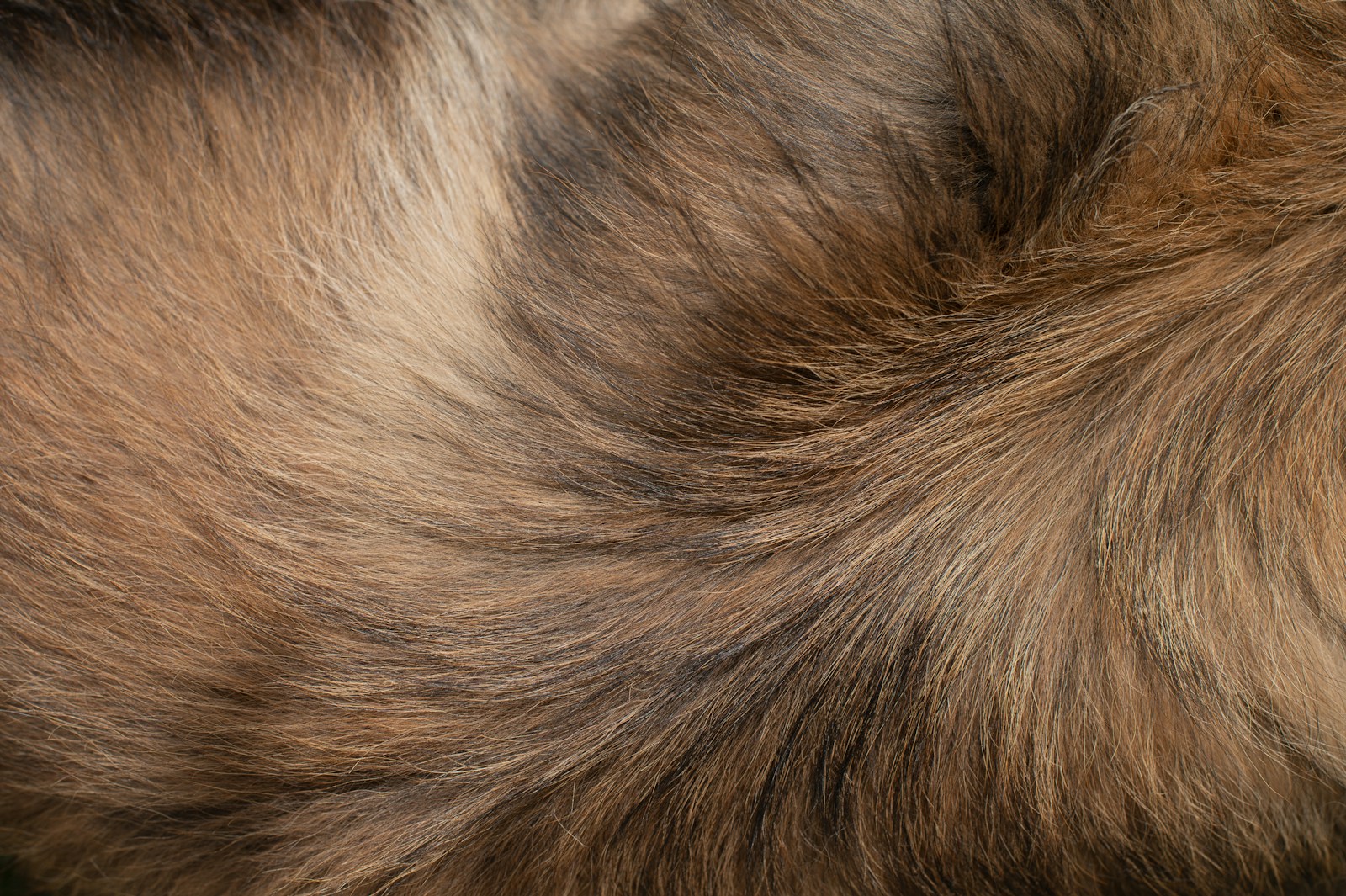
Just then there is the brush of…of what?…a tail, a feather?…against her calf. Erin leans forward, spots something furry and brown crouching under the seat. It stares back at her.
“It’s not mine,” she says. “It must belong to someone else. Maybe it got out of someone else’s bag and crawled under my seat.”
The man across the aisle says he’s never seen a dog that looked like that. Or a cat, either.
“Maybe it’s a rabbit,” suggests the girl in the row behind him.
“Nah,” says another, younger man a row ahead. “That’s what they call a bfm in the trade, a brown furry mammal.”
“What trade is that?” the girl asks.
“Shh,” says her father.
“Listen,” the conductor says. “You can’t bring exotics on the train. If that’s not a cat or a dog or a…rabbit, you’ll have to get off at the next station.”
Erin protests that she’s paid for her ticket to Penn Station. Besides, the animal isn’t hers.
“It’s wrapped around your ankle,” the conductor says. “Sure looks like it’s yours.”
Erin bursts into tears. Even she is surprised. She’s 34, far too old to be crying on a train. Around her everyone turns solicitous. The father offers a spare shopping bag and the younger man bends down, coaxes the animal inside. “Not that I think it will stay in there—it’ll probably chew its way right through.”
From the freezing platform five minutes later, Erin spots a little wooded area, the perfect place to release a wild animal. Because it has to be a wild animal, this small thing in the bag, though it doesn’t look like any creature she’s seen before. Could it be one of those crossbreed cats, or some kind of cloning experiment? She carries the bag over to the park, tucks it under a bench. Already it has chewed a ragged hole in the bag, but it doesn’t slink out through the hole, doesn’t bound away into the shrubs. Instead, one eye watches her through the hole until she turns away.
Back on the platform she texts Kyle to warn him she’s running late. He sends back a sad face emoji, then a second text. No worries! He’ll get himself a slice.
Two kids run up the steps to the platform, arguing over whether the cat they just saw was ugly or cute. The girl says she’s not at all sure it was a cat. She couldn’t see its ears. They were there, her brother insists, hidden under all its fur.
Erin slides her phone into her pocket, zips up her coat, and walks quickly away from them. It could be a coincidence—stray cats are common, but she keeps going until she reaches the other end of the platform.
Kyle has in fact saved her a slice, though it’s long since gone cold. Too tired to warm it up, she insists she’s not hungry. In that case, he says, if she doesn’t mind? He eats it cold, asking after her dad between bites. She shrugs. He’s no worse than last week.
“Is he seeing things again?”
“A dog this time. He thought I’d brought one with me.”
“What kind?”
“I’m really tired, Kyle.”
“Did he try to feed it like last time?”
“No,” she says. “He was worried I wasn’t taking care of it. A dog like that,” she starts to laugh—this had been the one funny moment of the visit—“he said a dog like that needs to run around three or four times a day, in the morning and evening and the afternoon. It can’t get enough fresh air. I don’t know where he gets this stuff from. He never had a dog.”
“Everyone knows dogs need a lot of exercise.”
Does she? Erin’s never thought much about dogs.
“I really should go out with you, one of these weekends.”
Erin doesn’t respond. For the last three months, she’s gone out every weekend to see her father in memory care. Kyle has not come once.
The next morning, there is a neat loaf of brown fur at the foot of the living room couch. Erin closes her eyes, counts to ten, then blinks hard and fast. It is still there, yawning, displaying a very small, very pink mouth. She can’t understand how it got here. Did it follow her? Even if it did, how did it get into the apartment? Did Kyle forget and leave a window open? He’s obsessed with cross ventilation, and she has to insist he close the windows at night. He blames all the true crime shows she watches for making her paranoid. No one wants to hurt her and besides, he’s around to protect her.
The animal loops between and around her ankles. When she steps away and crosses to the kitchen, it pounces after her, halting right where the carpet meets the kitchen tile. It watches as she measures out the coffee, spoons yoghurt into a bowl. She’ll have to feed it, but what? Does it eat meat like a cat or a dog? Greens like a rabbit or a guinea pig? Nuts? Fruit? She takes an apple from the bowl on the counter, slices it in quarters, cups a piece in a paper towel, and sets this offering down on the nearest tile. The animal hunches forward, nudges the apple with its nose. Then there is a faint sound: neat, precise crunching.
Once it has finished, it sits up and brings its paws together, rubbing the center of its face in small, quick circles. Finally it tucks itself back down into a loaf. One eye looks at her, then closes.
“I don’t know what it eats,” she tells Kyle. “I gave it some apple.”
Kyle stares at her. “You gave what some apple?”
She glances around the room. Maybe it has crept under the table? She thinks it is probably too big to squeeze under the sofa. “You don’t see anything?”
“Honey, are you okay?”
“I’m fine,” she laughs. “I haven’t been sleeping that well.”
While Kyle is in the bathroom, she steps on the pedal of the trash can. The paper towel, stained faintly brown with a few drops of oxidized apple juice, is right there on top where she dropped it. She doesn’t know whether to be relieved or worried.
The next morning there is no trace of the creature. Kyle must be right: she was over-tired, imagining things. She checks for a few more days and then, too soon, it’s the weekend again. She used to look forward to weekends, to Saturdays spent listening to music and cooking long, slow recipes: chili or roast chicken. Sundays she and Kyle would go to a museum or take the ferry across the river to visit a new neighborhood or have drinks with friends. Now Saturdays are for traveling back and forth to Riverhead. It’s not just the long train rides that exhaust her, it’s the trying to talk to her father. Spending time with him is like performing improv: she has to adapt to whatever scenario she finds herself in.
Her sister, Mia, managed to keep their father at home until his delusions became constant. He was convinced that Erin was stealing and selling off his collection of pocket watches (none of which worked) and that Mia had been replaced by a duplicate. His face, Mia said, I can’t describe what Dad’s face looked like when he thought I wasn’t me. He looked furious and at the same time, very scared.
Now when Erin and Mia visit, he worries he’s late for an important meeting with his district manager or that no one will give him any dinner. Their mother used to leave him a plate when she went out. Why hasn’t she done that?
His wife, their mother, has been dead for five years.
Mia’s son has a soccer match this weekend, so Erin is on her own for this visit. Determined not to waste money on a rideshare, she walks from the train station to the facility, telling herself the exercise will calm her. As she turns the corner away from the station, she thinks she sees something whisking in and out of the shrubs that line the sidewalk. She stops, draws back for a moment, then reminds herself that this is the suburbs: the whole place is thick with squirrels.
Her father doesn’t want to go to the afternoon sing-along so she wheels him to the solarium, nods as he frets over a meeting where the agenda has been derailed. No one warned him about these deficits! He told them they should always warn him!
“They should have, Dad,” she says. Every pamphlet, every website, every reddit post recommends playing along, not trying to argue them out of their delusion.
But somehow she’s missed a turn in his story; he’s irritated that she hasn’t understood him. “No. No. That’s not…” and then he asks, “Why is it like this? It’s not comfortable.”
Distraction, she decides, is the best approach. “Why don’t we go outside for some fresh air, Dad?” The sun is out, if he puts on his jacket, he won’t mind the cold.
“I’ve had enough fresh air,” he snaps. “I don’t need fresh air.”
She’s unsure what else to suggest. How can an hour last so long?
Too quickly for her to stop him, her father leans forward, reaches down with his right hand. “Oh,” he says, “Look at that.”
“Careful, dad,” she says. “If you dropped something, let me get it.”
“I just wanted to pet him.”
“Is there something there?”
“I’m not sure what it…it looked like a dog. Now I don’t….it doesn’t quite seem like a cat either. Maybe one of those funny animals from Australia, those…” he stops, shakes his head. The word won’t come.
“I don’t see anything,” she says. “Not even a marsupial.”
“Of course not!” And for one short moment he has the wry look he used to get when he was teasing her and Mia as children, waiting for them to see the joke. “No marsupials!”
The next instant his face shifts and he says something she can’t understand. Despite knowing the content is the trouble, not the volume, she leans closer. It’s like trying to identify fish caught in a flimsy net: a glitter and then a lot of splashing. He hauls up more and more; she pretends to listen.
But later, when she tells him she has to leave, and he says what he always says, that he’ll come too, and she has to say what she always says, next time, dad, not this time, it’s cold outside and besides, they have good ice cream here, he doesn’t sulk like he usually does.
Instead, he pats her hand. “You’ll take care of it? You’ll keep it safe?”
Play along, just play along. “Sure, Dad, of course.”
It’s a different conductor, a man whose stomach strains against the buttons of his uniform shirt. He barely glances at her ticket and says nothing about animals or bags. It isn’t on the train with her, then. Unless it has gotten better at hiding?
This is what comes of playing along—you start to imagine animals when they aren’t there. What had her father thought it was? On her phone, she searches for images of marsupials. Most of them she recognizes, save for several species she’s never heard of before. Pademelons and numbats and quokkas and the nearly extinct potoroo. None look quite right.
There’s a glaze of rain on the sidewalks that catches the streetlights as she walks home from her subway stop. Her own block is quiet, the corner deli shut up for the night. In the courtyard, a boy is leaning on the railing of the ramp leading to her entryway. She recognizes his dark hair, his long, narrow chin; he lives on the top floor and has two older sisters who are always exasperated with him. Surely he’s too young to be out at night on his own? Then she sees what he’s watching: it’s the animal, lounging at the bottom of the ramp, languid as a model. As Erin comes closer, the creature rises and stretches.
“He’s kind of funny,” the boy whispers, as if he doesn’t want the animal to hear. “I think there’s something wrong with his ears.”
She squints. The animal does look a bit bedraggled. “I think it’s okay. It’s just wet.”
All at once it shakes itself fast.
The boy laughs as droplets splash them. “He must be a dog,” he proclaims. “Only dogs shake like that.”
“Right,” Erin says as she starts up the walkway.
“You aren’t going to leave him out here? It’s cold,” the boy says.
She sighs. From her purse, she pulls the extra bag she grabbed on her way out of the house that morning. The animal tilts its head to the side. “Come on,” she says, stretching the top of the bag as wide as she can. It bounds inside, chittering with contentment.
Upstairs she cuts another apple, offering it two quarters this time. Its drying fur gives off a warm smell, a little musky, but without the feral tang she associates with cats. She extends her hand and it rubs its head against her knuckles. The fur is velvety, napped like the hair on the back of Kyle’s head right after he’s buzzed it.
From the recycling she extracts a flattened box and reassembles it, taping the bottom flaps back together. She takes a clean kitchen towel, folds it in half and then half again, and tucks it into one corner. Will the animal pee everywhere? If it does, how will she stop it?
“Accidents,” her sister said to her while they were discussing whether it was time to move their father into care. “There are lots of jokes about them, but nobody tells you it won’t be like a little kid’s accident.”
Deciding the bathtub will be the easiest to clean no matter what happens, Erin carries the box to the bathroom. The creature pads after her, stands with its front paws on the rim of the tub. A brief scrabble against the porcelain, and then it is curling up inside the box.
Falling asleep, she remembers a book Mia loved about a creature that lived all alone on an island. The Skog, he’d been called, and he was so shy he dressed up in sheets and made terrible noises to frighten away any visitors. In reality, he was a very small creature, like a mole crossed with a miniature anteater. That is what the animal in her bathroom resembles—something imaginary from a book. Though the crowded, busy lines in the illustration of the Skog always made him look a little dirty. This creature is immaculate, with warm brown fur.
Shouting from the bathroom wakes her and she realizes she forgot to warn Kyle about the animal. Not that it would have helped: He claims he can’t register anything before his morning shower.
She apologizes through the door and he flings it open, the box dangling from his hand. The bottom sags open, water dripping from both flaps. He can’t understand why she’d leave a cardboard box in the shower! Cardboard! Cardboard in a place where it would get soaked! Is the kind of dementia her father has…is it…he stops himself when he sees her face.
“Sorry,” he says. “I’m sorry.”
She is about to ask, but he hasn’t said a word about the animal, so it must not be here. Asking will only convince him there really is something wrong with her. And maybe there is, maybe it’s already starting. She has asked if her father’s particular type of dementia is hereditary. “Probably not?” was the neurologist’s answer.
“It’s all the stress,” Kyle says. “You’re hardly sleeping—I’m sure that’s what it is.”
“Let me handle that,” she reaches for the box.
“Be careful,” he says, “It’s dropping water everywhere.”
She squeezes the flaps together over the sink. The cardboard smells of chewed trees overlaid with something else: a hint of musk and licorice.
Her father hardly ever told stories about his childhood. Erin suspects he didn’t enjoy being a child, found it somehow undignified. What little he did tell them about his family was mostly about their cat, Panther. She was older, set in her ways, and when they’d moved to a bigger house several towns over, Panther ran away. Days after they’d searched everywhere and despaired of finding her, the new owners of their old house called to report that Panther was on their doorstep. His mother had driven 20 or 30 or 50 miles (each time her father told the story, the distance increased) and retrieved Panther. They tried keeping her inside the house, but the second anyone left a door ajar, she was gone again, back to the old house.
What tickled their father was the moral: You couldn’t make a cat do anything. Creatures had minds of their own.
Only now does Erin realize he never said what happened to Panther: did she finally agree to the move and stay or did she keep running away? Did the new owners take her in?
Mia doesn’t remember the end of the story either and she professes herself baffled by Erin’s sudden interest in Panther. From somewhere in the background comes a childish shriek and Mia shouts to keep it down, she’s on a call. “Do you want to have pizza tonight or not? Who has time for that kind of thing?” It takes a minute for Erin to understand that this second question is directed at her because Mia’s voice hasn’t settled back down from bossy mother to ostensibly equal sister.
Erin agrees that not everyone has the mental space to think about long dead cats. Maybe it’d be better if she didn’t? Mia doesn’t laugh.
Before their father started coming apart, the sisters spoke only once or twice a month, for birthdays or to work out the hosting for the holidays. Now their conversations about their father often end in disagreements. Erin views their father’s delusions and hallucinations as meaningless, the random output of a brain on shuffle, while Mia is the kind of person who interprets dreams. Mia is convinced their father never really forgave Erin for stealing $10 from his wallet when she was eleven. “He’s always worried you’re the one stealing something,” Mia points out, “he never accuses me.” And all those meetings that keep ending so badly? They can’t simply be meetings; they must carry some deeper psychological significance. Erin finds these attempts to sift meaning from their father’s chaos excruciating, far too similar to his own desperate and furious insistence that his delusions are real. Sometimes she wonders whether she and Mia will speak to each other at all once their father is totally, finally gone.
Now Mia is saying she’ll understand if Erin can’t go.
“This Wednesday, you mean?”
It’s short notice and if Erin can’t make it, Mia says, it won’t be that big a deal. In truth the visits are more for Mia’s peace of mind than for their father. She missed a Wednesday last month and he didn’t seem to notice.
Mia wanted her to take that Wednesday visit too. Erin begged off; it was such a long way to go after work. Because she still feels a little guilty about refusing, she agrees to go this time. Besides, it will give her the opportunity to ask her father about Panther, which she can’t do if Mia is around. Mia believes asking their father about his memories is not just cruel but actually “elder abuse adjacent” because it “can only end in frustration.” Or so claims the nurse and supposed dementia guru that Mia follows on TikTok.
Kyle surprises her by deciding Wednesday is the perfect opportunity for him to visit. He borrows his cousin’s car and insists they both leave work early to avoid traffic. Even so it’s dark when they arrive and the wind is up, whipping the trees, clacking their empty branches together hard enough to strike flame. Erin is sure she sees a flicker, a glow, in the wooded lot behind the parking area. Something rustles hard and heavy. Deer, Kyle says and Erin nods. They are common out here and of course they’d sound large: they’re full grown. It’s the wrong season for fawns.
Her father is in his room, sitting in his wheelchair, looking at nothing. She gives him the quickest of hugs and Kyle holds out his hand. Rather than shake it, her father raises his own hand and gives Kyle a little wave, a frail monarch acknowledging a subject.
Two residents are watching Wheel of Fortune in the living room, so Erin reluctantly pushes her father across the hall to the library. She finds it the most unsettling room in the facility, can’t see anything but bleakness in those wide shelves of books none of the residents are capable of reading anymore.
She leaves Kyle to settle her father and walks to the kitchen to ask for a cup of tea. Marybelle, her father’s favorite aide, offers to bring it over when it’s ready so Erin can enjoy her visit. Erin demurs, claiming she doesn’t want to make extra work for Marybelle. She hopes Marybelle believes her, that she doesn’t suspect that Erin would rather spend the five minutes at the kitchen station waiting for the water to boil than sit with her father and Kyle.
She returns to find Kyle has spread open Great Palaces of Europe in front of her father. The distraction isn’t working: her father is anxious for the tea. No sooner has Erin set it down on the table, then he pulls the steaming mug close, splashing Versailles.
“Let me help you with that,” Kyle says. Her father puts his hand over the mug, as if worried Kyle will take it away.
“It’s okay, Dad,” Erin says, “We just don’t want you to get burned. It’s very hot.”
Her father leans his face closer to the surface of the mug, blows, but his aim is so off that he’s actually blowing on his hand.
“Erin hates to wait too,” Kyle says to her father. “I bet she was always impatient, even as a little girl.”
Her father looks blankly at Kyle. “Who’s a little girl?”
“Never mind, Dad,” Erin says.
One of the other residents stops in the doorway of the library, a stuffed brown dachshund balanced on her shoulder. Erin’s father gives the woman his royal wave. She imitates the motion with one of the dog’s front paws before wandering away.
Her father goes back to blowing on his hand and Erin decides it’s as good a time as any to ask. “You had a pet, a cat, once, didn’t you, Dad?”
He looks up at her.
“Her name was Panther, right?”
“Panther?” her father says. “Oh, Panther. Was she very bad?”
“You told me,” Erin says, “that she used to run away. After your family moved, she wouldn’t stay at your new house.”
“Well who can blame her?” He shakes his head.
She wants to ask him not simply what happened, but whether he missed his pet, how he handled her being gone. Even if he could remember, though, she knows he wouldn’t willingly answer such questions. After their mother died, he never talked about how he felt, at least not with her or Mia. He’d been like that their whole lives: all they could do was guess based on how he behaved, whether he was yelling or quiet or sometimes, much more rarely, laughing.
“You should ask my mum,” her father says, sitting up straighter, pleased to have solved a problem. “She was just here—did you see her?”
Kyle makes a laugh like a snort and claps his hand over his mouth. On the drive up, Erin explained the importance of playing along, though in moments like this, she too wonders if it really is the best approach. Besides how can she fake this? She’s never met her grandmother. She died before Erin’s father emigrated, a decade before she and Mia were born.
“I must have missed her, Dad.”
“Oh that’s too bad. She was here a minute ago. Not my dad, though. I don’t know where…” He slumps in his wheelchair, then begins to fiddle with the lever that secures the right footrest.
“Don’t do that, Dad,” Erin says, her voice more tired than sharp. “Last time you took the whole thing apart.”
“Is it broken?”
“No,” she says. “Please stop fiddling with it, Dad. Please.”
Kyle clears his throat. “Bob, I really don’t think you should do that.”
Erin’s father looks up at Kyle for a moment, then rattles the lever harder.
“Come on, Dad,” Erin says. “Your tea is cool enough to drink.”
He picks up the mug, his hand shaking so badly it looks like he will spill all of it before he finally gets it to his mouth and takes a long gulp. Then he starts choking. Kyle jumps up, says he’ll get an aide. Erin touches his arm to stop him. Many things make her father choke now and she and Mia have learned to wait and see if it ends on its own before summoning help. Finally her father picks up the napkin, dabs ineffectually at his mouth.
“Are you okay, Dad?”
He takes another long swig of tea, chokes again. This time the coughing lasts only a moment.
Kyle goes down to warm up the car while Erin wheels her father back to his room. She switches on his radio, checking that it is tuned to the local classical station. He doesn’t seem to be paying attention as she slips on her coat, slings her bag over her shoulder.
“Stay!” he says, so suddenly she flinches. “Stay here!”
Erin sighs, tries to think of what Mia’s dementia guru would say. “Not tonight, dad,” she says, “I can’t stay tonight.”
“Not you.” He points at the floor. “It belongs here. It can’t go with you.” His voice is firm, familiar, her father at his sternest, correcting her once again. Her entire childhood, misunderstandings like these brought on snapped commands to mind her own beeswax, to stay out of what she couldn’t possibly comprehend. When she was young, nothing seemed to be her business. Now, though, it has to be hers. Whose else’s can it be?
“I don’t know, Dad,” she says. “Maybe it wants to come with me. Maybe it does what it wants, like Panther.”
“Not this one,” her father says. “This one belongs here. You need to leave it here. Tell it to stay here.”
“Okay,” she says. Her voice quivers over the “stay here,” too close to laughter.
“That won’t work,” her father says.
“Stay here!” But the force strains her voice.
He shakes his head and she knows it means not good enough because it is the same way he shook his head at her when she was 9 and 15 and 24 and 30. Every time she flubbed a solo or got a B+ or missed out on a job promotion or introduced him to a guy. Disappointment: that’s what he has no trouble remembering. It’s what they both remember best about each other.
All the way home she’s sure she hears something in the back: a gentle snuffle or the faint rasp of a paw drawn over an ear. She cranes her neck. Is that streak of white the tip of a tail, or the back bit of foot, or just a trick of the light from a passing car? She knows how easy it is to hide back there: she and Mia used to crouch on the floor of their old car to spook their parents. This creature is so small it could slip right into that narrow slot of space under her seat.
Kyle wants to know if she forgot something and when she looks at him, puzzled, he tells her she doesn’t need to keep turning around. He can see her bag on the seat right next to his jacket. “That’s the magic power of a rear-view mirror.”
“Right,” she says. “I guess I’m still…”
He reaches over and squeezes her knee. He knows, he says. Not that it was as bad as he expected. “I don’t know what I imagined,” he laughs. “Crazy and naked, maybe. Instead, he’s just a quiet old man. He’s not as bonkers as the others—that woman thought her dog was real, you could totally tell. Your dad, though, he doesn’t really seem that different.”
She takes a long breath, holds it. In the quiet she hears a faint, soft flop that could be the creature settling itself down to nap. She slides her hand down to the bottom edge of her seat. Impossible, surely, to actually feel the warmth a creature gives off. Yet there is a fuzz of rising heat like a halo, an aura, just brushing her fingertips.
Which is worse, she wonders: seeing things that are not there? Or not seeing the things that are?
A graduate of the Brooklyn College MFA program, Phebe Kirkham lives in Queens and teaches literature and creative writing at York College/CUNY. Her work has appeared in Pithead Chapel, Pangyrus, Toasted Cheese, and Mystery Tribune.