
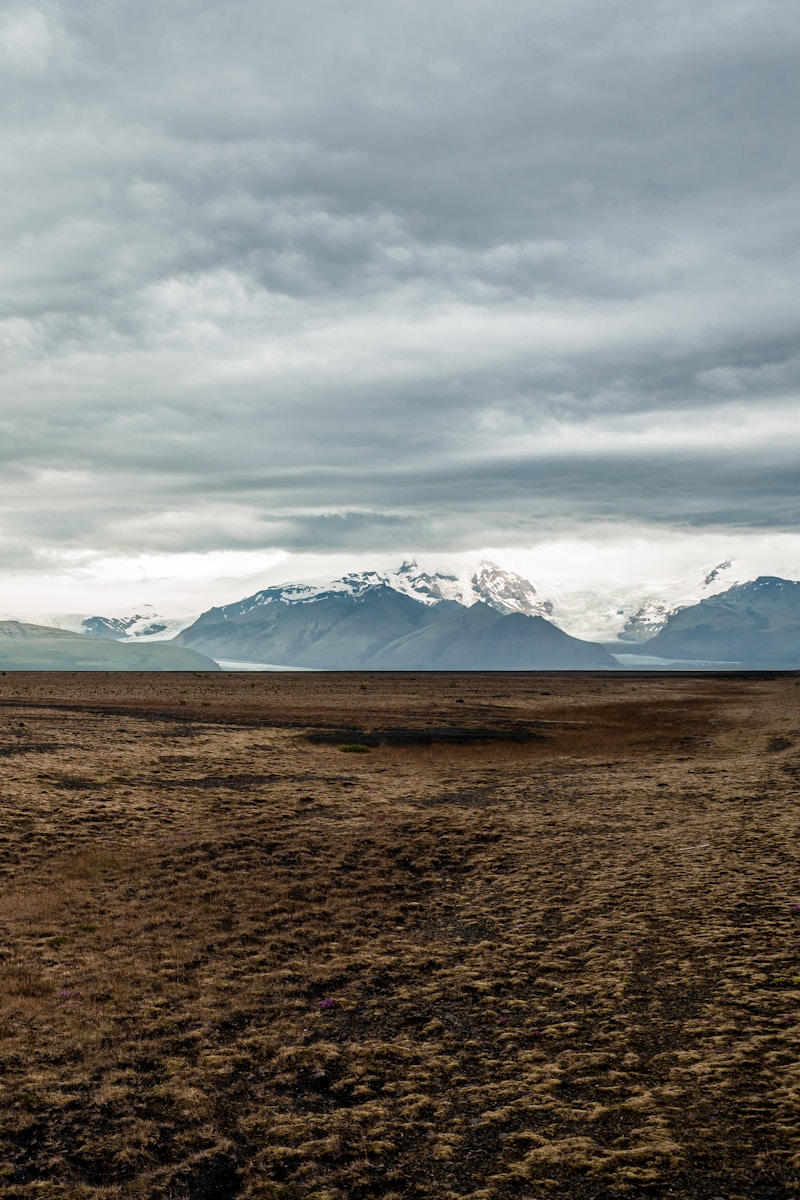
There wasn’t much to carry, but as she unloaded boxes into her new home, Maggie’s lungs spasmed, unaccustomed to breathing the dry, sparse air. Still, she loved the desert instantly.
Though this wasn’t a desert, her neighbor informed her. “It’s actually a steppe climate,” he said, standing a few feet from her door, gesturing with a Tupperware of brownies melting into each other. “It’s not dry enough to be a true desert.”
“Oh,” Maggie responded, looking past him at this landscape that still felt more like a postcard than her home. It was all dust and desiccated, reedy bushes. The occasional cactus or succulent, so hard and slow growing, they seemed like rocks. She couldn’t imagine any place drier, or that after a certain amount of uninhabitability, anyone would bother to make a distinction.
“Not that it really matters. Most people call it a desert anyway,” he added.
Maggie nodded. Though if it didn’t matter, she wondered why he kept talking about it.
He began describing the species of scrub brush peppering the dirt, and she pressed the box she was holding against her hip. It held her painting supplies, heavy with tubes and brushes and instructional books containing step-by-steps on rendering the likenesses of dead-eyed horses and relentlessly cheerful flowers that now seemed to belong to another world entirely.
Maggie imagined buying some pansies and planting them in the gaps between the scrub brush her neighbor was still rattling on about. She wondered how many days until they wilted, and figured the answer was probably just one. She could take pictures, paint them before and after, next to the scrub brush, unchanged. The nearest gardening store, however, had to be at least a few hours away, and they probably wouldn’t be foolish enough to sell flowers as fragile as pansies.
Maggie watched the brownies slingshot against the side of the container in her neighbor’s hands as he gestured further into the valley.
Despite tension in her arms, she worried setting the box down would seem like an invitation to continue talking—for him to continue talking. She’d neither anticipated nor invited his arrival. She hadn’t even thought she’d have neighbors here, and maybe she didn’t. If you had to drive several miles on a highway—even one as small as the two lanes that stretched between their houses—you weren’t really neighbors.
“Are you from out of state?” the man asked. A mild smile crinkled his suntanned face. Despite the sprouting lines, Maggie guessed he was at most half her age.
A few seconds passed before she realized he was addressing her, expecting an answer. She made a small, affirmative noise and noticed his eyes shift to her car with its compressed stature and Massachusetts plates. She hadn’t seen another Toyota Yaris on the road since Missouri, and her car almost looked like a toy next to his, a truck that sat so high off the ground that she could see beams crossing under it.
“Is this retirement then?” he asked.
Maggie nodded. She didn’t like being so easily read, though she knew this was an obvious guess. If a woman of her age moves to the desert—to the steppe—alone, what else was someone supposed to think?
“It’s a nice place,” he said. “Though it can get kind of same old, same old sometimes. Not to be down on your new home. Can’t beat the views.” He turned over his shoulder like he was reminding himself of the mountains that surrounded their valley.
Maggie didn’t respond, and his face flexed in a brief smile. He extended the container towards her, and she set down her box to accept the brownies, their warmth radiating through the plastic.
“Don’t get too impressed. It’s just the Betty Crocker mix with a little extra butter.”
“Thanks,” she said, glancing at the piece of lined paper fixed to the lid by a shred of painter’s tape.
“Those are a few of my favorite restaurants, if you ever find yourself in Reno. Hate to say anything closer is just a gas station Subway or a pizza place in a truck stop.”
“Thanks,” Maggie repeated, though she didn’t ever plan to go to Reno. That wasn’t the point.
“My landline’s at the bottom. Reception isn’t so good here, so I really only ever turn on my cell phone when traveling, but I put it on there too. Holler if you need anything.”
He’d marked his number as Dan (neighbor), and when she looked up, Dan was waving as he mounted the truck’s high step and launched himself into the driver’s seat.
“Don’t be a stranger,” he added, closing the door.
Maggie had never liked that expression. It was only ever said by strangers, and she was fine with them remaining so. She nodded anyway and waved as Dan backed his truck onto the road to drive to the next closest house, a good few miles away.
At first, Maggie had tried cleaning up the red dust that embedded itself in all the crevices of her house, but she’d given up after a week. Now three months of particulate was nestled in every imperfection of her grey floorboards, creating branching streaks like her house was growing veins. These blemishes had bothered her at first, but she was beginning to like them, how they warmed the originally sterile interior. The dust was starting to seem like one of those details that makes a place home.
The area by the front door was the most discolored, a rusted patch where she left her shoes. Maggie shoved her foot past the boot’s inflexible neck. She liked the way hiking boots squeezed her feet. They made her feel safe and protected, and out here she could wear them every time she left the house without seeming overprepared.
As Maggie closed the door behind her, she could feel the warmth of the sun through the pale fabric of her long sleeves and pants. Before moving, she’d donated every piece of clothing that was dark in color, black slacks, navy blouses, even her funeral dress. If it wasn’t suitable for walking in the desert, if it didn’t already have a few splotches of paint on it, it wasn’t part of the life Maggie lived now and so she didn’t think it was worth keeping.
She chose a direction and started walking. She did this every day, radiating outward from her house. Eventually, she thought, she’d cover every inch of the valley, though she wasn’t systematic enough to know if this was really true. She didn’t know how long any of her walks were, just that she was gone for several hours. This reminded her of stories where people became disoriented in the desert. She had always thought it was dehydration, but now she realized how the landscape could bewilder someone on its own. She could walk for hours over the open expanse—passing the same shrubs that could maybe be different shrubs if she knew how to identify them—and the mountains would seem no closer.
She didn’t, however, think she’d passed by this spot before, a patch of small, perfectly round cacti. Bright green, almost yellow in color, like a pile of prickly tennis balls. Points of pink jutted out from the tops of some of the cacti, and it took Maggie a moment to understand these were flower buds. She pulled out her small digital camera and held it up to capture the cacti. Maggie went on these walks mostly for their own sake, but she also told herself that she was scouting places to paint. However, so far, her easel remained its corner in the living room. She was still trying to perfect the one angle of the landscape she saw from the window, several partial canvases abandoned in the spare room.
As Maggie lowered the camera, something flickered by her feet.
“Oh,” she said, jumping back, a puff of orange dirt sprinkling her boots. She expected to glimpse a rattlesnake—both terrifying and welcome as some excitement—but it was just a small lizard. It darted under the cacti, and she crouched, trying to spot the lizard’s grey skin through the spines. She waited a minute, but once her heart no longer slapped inside her chest, she gave up and continued on her walk.
This lizard was the first life she’d seen other than the speck of a bird in the sky, and her response to it, her Oh, was the first sound she’d uttered on one of these walks.
Maggie had hardly told anyone about her plans for retirement. Just her boss, because she’d felt compelled to when he’d asked when her last day would be. Her boss’s assistant had then sent her an article, 10 signs to watch out for in the loneliness epidemic. Sign number three had started, It’s not a myth! Some people really do talk to themselves. Maggie had read the article, but she thought each of the ten signs outlined someone else. Sign five had asked, Do you spend more time on the internet than you do with people IRL? She conjured the image of someone younger, probably a man in poorly lit apartment whose only friends were online. People like that wondered why nothing changed, and Maggie couldn’t relate. She had made a choice.
Still, her Oh echoed in her mind for the rest of her walk. Despite her dismissal of the article, she’d been waiting for a moment where she’d catch herself playing out one of the signs. However, she also thought talking to yourself was only a problem among people who talked much to begin with. Since she’d connected her landline, it had only rung once. On the other end had been the movers with her furniture, calling before they turned off I-80 to be sure they had the right address. Maggie’s voice had cracked from disuse as she responded, sending a tingle through her body. Even when the movers arrived, she’d held her words tight, like something precious, only speaking a few sentences with no more substance than, “In the living room, please. Against that wall.”
She’d never felt more free.
Errands had become a sort of game, to see how long she could go between trips. Maggie waited until she only had three meals left in her pantry, though her definition of a meal steadily disintegrated leading up to her shopping trip. Last night, she’d eaten half a can of lima beans for dinner. The other half was breakfast.
Both of the two shopping carts were in use when she parked outside Saver’s Market. She grabbed the solitary handbasket on her way in and cut through the dense aisles directly to the prepackaged meals. She surveyed the various amalgamations of rice and beans, each promising transformation with just the addition of boiling water, though they never looked as good as the pictures on the packages. She carefully stacked the boxes in her basket, aligning their corners to fit in as many as possible. She already knew she’d have to return to the store sooner than if she’d had a cart.
Maggie let out a long, slow breath when she saw the cashier on duty. This was also part of the game. Since moving to Nevada, she could count the number of people she’d spoken to on one hand: Dan, the two movers, and one Saver’s Market cashier. A teenage boy with raw nostrils and flaking lips that looked drier than the air. His voice had sounded hoarse too, but she couldn’t entirely be sure. Their exchange never ventured beyond him asking, “Paper or plastic?” and Maggie responding, “Paper.”
Today, in the crusty teenager’s place, stood a woman about Maggie’s age, her grey hair cropped close to her head.
“Hiya,” the cashier said.
Maggie smiled as she rested the corner of her basket on the counter. She looked down at her hands and began unloading items onto the conveyor belt.
“Maggie!” a voice called out behind her.
She turned to see Dan with his unguarded smile, his elbows resting on the handle of a shopping cart, which wasn’t even that full. She took note of Dan’s selfishness in the open spaces between a bag of pistachios, a six pack of beer, a few TV dinners, a carton of milk, and some baby carrots.
“Tracey, have you met my new neighbor yet?” Dan asked. “New-ish, I guess.”
“Nice to meet you, Maggie.”
Tracey offered a toothless smile, and Maggie echoed her greeting regretfully.
“Lucky you, being neighbors,” Tracey continued. “Dan’s such a sweetheart. He’s been helping my son out with his homework since he started struggling in math.”
As soon as Tracey finished speaking, she turned to grin at Dan. Maggie had already known that this comment wasn’t really for her, though she said, “Nice,” anyway.
“Are you in that long red house then?” Tracey asked. “It’s been empty a while.”
Maggie shook her head, though she knew which house Tracey was talking about. She’d considered buying it. The red house had been one of the few remote options that wasn’t just an empty lot. It was a little smaller, even more appropriate for Maggie alone. And unlike the square, stucco structure she lived in now, the red house had a slanted roof and slatted sides, which seemed more like home to Maggie. The only factor that had deterred her from purchasing it was that it was closer to the only other occupied house in the area, Dan’s.
“She’s where Jesse and his kid used to live,” Dan clarified with a detail meaningless to Maggie.
“I miss Jesse. His boy was so sweet,” Tracey said. She’d been slower since Dan arrived, but now she’d entirely stopped scanning Maggie’s groceries.
“Jesse’s son used to help Tracey out with her dogs,” Dan explained. “She fosters elderly pups. Bet you didn’t know Tracey’s a saint.”
“No,” Maggie said, unsure of what else to say.
“You’re too sweet.” Tracey smiled as she unhurriedly resumed scanning Maggie’s items.
“How’s settling in been?” Dan asked Maggie, beginning to unload his groceries behind hers.
“Good,” Maggie said.
“What have you been up to?”
“Hobbies.” That’s what she’d told her coworkers when they’d asked what she planned to do in retirement. If you did something enough, anything could be a hobby, Maggie thought.
“I should have you over for dinner some time. I know this doesn’t look like much.” Dan gestured over his baby carrots and six pack dragging forward on the conveyor belt. “But I’m actually an okay cook—not great, but okay, sure. Though, I’m thinking maybe you’re not much of a cook either.”
Maggie watched four boxes of jambalaya rice mix travel through Tracey’s hands. Beep, beep, beep, beep.
“Maybe we can have a frozen and dehydrated food dinner party,” Dan said. “You strike me as someone who’s willing to do things a little different.”
Maggie shrugged.
“Paper or plastic?” Tracey asked.
“Plastic.”
Maggie’s paintbrushes were oily with pinks and greens she hardly ever used. She’d hoped to catch the cacti in bloom, though she couldn’t find them again, and by now, their peak had probably passed. The flowers were likely crinkled dry and brown, and while that would have fit her usual color scheme, she instead tried to paint what the fully bloomed flowers might have looked like.
She was one flower in and wanted to abandon the canvas. She dashed white highlights, trying to save the petals—which were too oval, too bright, almost surreal. The painting reminded her of a flowering cactus she’d seen for sale at a grocery store in Boston. Swept by freezing air each time the automatic doors slid open, she’d wondered how the cactus was alive enough to bloom. But getting closer, she’d realized the flower was plastic, glued onto the flesh between the spines.
Maggie carried the canvas into the spare room, empty beyond a handful of other partially finished paintings. When she’d first moved in, she’d had no idea what one person could possibly do with two extra rooms, but she’d quickly learned that they were for forgetting things while still toying with possibility that you might want to remember them again.
In the kitchen, she dropped her brushes in the sink. The pinks and greens had mixed, a greyish brown pooling in the crook of her hand. The color was uglier than the painting, and she found some assurance in that. She pressed back the handle, but nothing released from the faucet. Part of Maggie had been waiting for this moment, because this is what everyone in Boston—or at least the few people who knew enough about her plans to say anything—had warned her about, the things she couldn’t fix herself. But unlike the dire examples weighing down everyone else’s worry, this was just inconvenience, irritation at worst. She’d figure it out and that would show them she was fine—show all the people who’d never been there to see.
Maggie left Dan a message at the tone, the second time. The first time, she’d hung up on the automated voice.
For six months, the note with his number had been sitting in a drawer below the phone, folded up and shoved into an address book that was largely unmarked, a few other scraps of paper and napkins pressed between the pages.
After the factory-default woman read out Dan’s number, Maggie cracked her voice open. “Hi Dan, it’s Maggie. My sink is broken. I was wondering if you know a plumber around here?”
She almost hung up before she realized he would need to call her back. She hesitated before reading out her number. She liked the idea that she had his number, but he didn’t have hers. Relinquishing this information, she slid the leaf of paper back in between the pages of her address book.
Dan showed up with a toolbox and a bag stretched near to breaking by a few circuitous pieces of plastic tubing. Within minutes, he was on his hands and knees on Maggie’s kitchen floor, his torso disappearing into the cabinet under her sink. She had to stoop to watch him do nothing more than run his fingers over the pipes.
“I’m no expert, but looks normal,” he said, standing up.
He reached for the faucet, which irritated Maggie. Did he think she hadn’t tried turning it on or that by just looking, he’d fixed it? The grey-brown of the paints still dulled the basin of the sink. He pushed the handle, and it flopped back down with the dull slap of cheap metal.
“Your plumbing’s fine, but the handle’s broken.”
Maggie’s frustration shifted from Dan to herself, for not noticing the limpness sooner, for needing someone else to point it out.
“It’s probably just disconnected on the inside, but first, do you have any bleach?”
Maggie nodded. “Why?”
“There’s just a little bit of mouse poop under there. It doesn’t look fresh.”
“Oh,” Maggie said, surprised. She thought mice were city creatures, running through the walls of apartment buildings like mazes. “I didn’t even know there are mice around here.”
“A lot of people think shit can’t survive here, but there’s so much—lizards, eagles, rabbits, and coyotes and stuff. I’m actually better at finding the super dead life. I go fossil hunting with a buddy of mine. It was really hard when I first started, but then you develop an eye for it. Like once you know what you’re looking for, bits of rock everywhere that jump out at you, and you’re finding all these tiny, fossilized seashells. Did you know this whole place used to be an ocean?”
Maggie shook her head. She wondered what could possibly make an ocean disappear.
“Yeah, hundreds of millions of years ago, your house and mine would be full of fish and nautiluses and stuff. Funny to think about now.”
Maggie nodded, though she didn’t find this funny to think about. It was just a different world, one where neither of their houses existed.
“I’ve never found any big fossils, but there were even some aquatic dinosaurs. If they were still around, your kitchen sink would be the least of your problems.” Dan laughed.
Maggie nodded. “I’ll get the bleach.”
She watched his smile falter briefly, almost imperceptibly, and for a moment, she regretted her curtness. But as soon as the feeling registered, he turned his back to her and began fussing with the faucet, which she took as an opportunity to slip out back door and head to the small shed behind her house.
Next to a few unopened boxes with labels like Pictures and Important, the bleach sat among an assortment of other cleaning supplies Maggie hardly used. She tried to avoid seriously cleaning by being as neat as possible in her day-to-day life. Still, some combination of time and being alive turned into dust that crawled across the floor and a film on the bottom of the bathtub.
Grabbing the bottle of bleach, she left the shed. She reached for the handle of the back door but didn’t turn it. Through the cheap wood, Maggie could hear the sounds of Dan’s efforts, soft clangs and the faint whistle of a tune she didn’t recognize. He seemed incapable of being silent.
She loosened her grip from the doorknob. Dan would take longer if he distracted himself with his insatiable need to make conversation, and the day was beautiful. She might as well wait outside for him to finish. Despite her fear of burning, the sun felt good on the back of her neck. She turned around to face its warmth, swinging the bottle of bleach in her hands. It slipped, thudding softly in the dirt. She picked it up and brushed off the terracotta dust, though the white bottle remained tinged orange like a Tupperware that once held tomato sauce. As she picked up the bleach, the kitchen became suddenly quiet. Then, she could hear the seamless cascade of running water.
“Took you a minute,” Dan said when she returned to the kitchen.
“I forgot where the bleach was.”
He nodded, and Maggie caught the slightest lift of his eyebrows.
“Well, there you go,” he said, pushing the handle back and releasing a clear stream.
Shutting off the faucet, he reached for the spray bottle in her hands and climbed under the sink to mist one corner of the cabinet. She grabbed a few paper towels off the roll, though he stood up before she could hand them to him.
“You’re supposed to wait a few minutes,” he explained, leaning against the counter. “To make sure it really kills whatever diseases could be in there.”
Maggie nodded. She’d never taken such caution in her old apartment, though she figured it would be worse to get sick out here. When she’d been packing up to move, her former upstairs neighbor had asked her what would happen if she became ill in Nevada or fell while out on a walk. Maggie still didn’t have a good answer, though she hadn’t had great answers in Boston either.
“Got any plans later?” Dan asked.
“I’ll go for a walk.”
“Nice, where do you like to walk?”
“Around here.”
“Nice,” he repeated, looking down at the floor, where the dust from his sneakers settled into the grid of white tiles.
Maggie was accustomed to her own discomfort in conversations. The effortlessness with which others chatted always made her feel all the more alien, and she’d thought of Dan as one of those effortless people, but now she could sense he also was not enjoying himself. However, instead of solidarity or kinship, his palpable uneasiness only made her feel worse. Perhaps because she knew that unlike her, he expected something better.
She opened her mouth, thinking of parroting his question back to him, as she had often done with her coworkers in the minutes trapped in elevators or in meetings where she arrived too early. Instead, Maggie asked, “How did the ocean disappear?”
Dan paused, his expression exchanging discomfort for consideration. “I actually don’t know. Probably just the continents shifting over time and stuff like that, or maybe some big cataclysmic event was part of it. I’ll have to look that up. Can you hand me those?”
She gave him the paper towels and he dipped back under the sink, emerging with a dampened wad cushioning four dark pellets. He threw the droppings in the trash and washed his hands before picking up his toolbox and the bag of pipes, the plastic now split in several places.
Maggie trailed him towards the door, though she nearly collided with his back when he stopped in the living room.
“You know, you seem like someone who would have a lot more art.” He was glancing around at the bare white walls.
“Oh.”
“I don’t mean that in a bad way. You just seem, like, artsy maybe. Are you gonna hang that up when you finish?”
He pointed to the easel in the corner of her mostly empty living room. On it sat the beginnings of what could be a painting of anything, long flat brushstrokes of blues above browns. Maggie always found it hardest to move past this stage, where a painting began transitioning from anything to something.
“Maybe,” she said, though it was more likely it would join the others in the spare room, incomplete.
“Did you come here to be the next Georgia O’Keeffe?”
“I just like to paint.”
That had been her whole plan for retirement, to sit by herself and paint, though the reality was far less peaceful than she’d envisioned. She’d hoped that maybe out here—without even the possibility that someone else might see her paintings—she’d be less critical of herself, but she still hated almost everything she painted.
“That’s nice,” he said. “I don’t really do art, but I’ve always liked Georgia O’Keefe. Her stuff reminds me of home—the landscapes and skulls, not the flowers.”
Maggie could sense his voice slightly warm with embarrassment. She smiled. This she found funny.
“Though you should have moved to New Mexico if you’re trying to be Georgia O’Keefe,” he continued, even though she already said she wasn’t. “But the Nevada landscape has definitely got its similarities, especially compared to everyone else’s paintings of trees and waterfalls and the ocean and stuff. Even if this place used to be an ocean, I appreciate it now.”
“I do too,” Maggie said, opening the door.
After she watched his truck pull onto the road, she grabbed her fleece and a flashlight to take a walk in the last hour of sunlight. Dan had stayed for longer than she’d expected, but she was glad her sink was fixed.
The sun was setting over the distant mountains, and as Maggie walked, she studied the rocks that lined the path’s loose dirt, searching for glints of a former ocean.
It started with one of the windows in the living room, a steady trickle from the corner, running down the wall. Water pooled on the floor behind Maggie, unaware as she sat at her easel, mixing darker hues into her paints to match the storming world outside. She didn’t hate this painting as much as she thought she would. With its contrast to the bright blues and soft tera cotta of a typical desert landscape, she actually kind of liked it. She took that as a sign to stop, before her next brushstroke became something she’d regret.
As she cleaned up, Maggie stepped in the forming puddle. She ran to the kitchen and grabbed a few rags, which she spread across the floor and shoved into the window’s leaking corner. She’d have to drive to Fallon to get some caulk when the rain stopped.
While waiting for the kettle to boil, Maggie washed her brushes. The rain shifted direction and slammed against the window above the sink, startling her. Maybe she had become unaccustomed to the rain, or maybe the storms here were truly more vicious. This was the first precipitation since she’d moved to Nevada. She’d noticed the purplish section of sky lingering over the far side of the valley that morning. When the storm reached her house in the early evening, the sound was cacophonous. Perhaps it was the structure of her house—its flat, boxy roof—that amplified the noise. In Massachusetts, rain had never directly bombarded her ceiling. She’d lived in the bottom of a two-family home, but here, she was no longer sheltered by someone else quietly living above her.
Maggie turned off the kettle and poured the boiling water into the bowl with her dehydrated rice and beans. She placed a plate on top and went to check the leaking window as her dinner reanimated. The rags were swelling, sticking to the floor with their growing weight. She thought of replacing them but quickly forgot as she found the beginnings of new streams of water, loosening the dust in the floorboards’ cracks. In one corner of the living room, the ceiling was starting to bubble. Maggie grabbed her painting knife and, stepping on a chair, pressed it into one of the ballooning mounds. Brown water exploded out, splattering her pants and the floor. She left the remaining bubbles alone and put on her boots. The dirt nestled in the treads began to disintegrate in the spreading water. That was when Maggie realized it was also coming in from under the door.
She ran into the kitchen, though she knew she was beyond piling rags against windows and planning to buy caulk. She lifted the plate off of her dinner and began spooning the warm, crunchy rice into her mouth, unsure of what else to do.
Among the discord of the rain, Maggie didn’t hear the knock at first. Then it became a pounding. Before she opened the door, she knew it was Dan. He was wearing goggles as if he were in a woodshop. His upper half was protected by a raincoat, but she could see that his pants were already soaked through.
“Oh shit,” he said, staring past Maggie into her living room, where the broken plaster from the ceiling and its rusty particulate diluted in the shallow pond on the floor.
“I shouldn’t need to tell you we need to get out of here,” he said. “Grab what you can quickly, and let’s go.”
“Where?”
“Higher ground. Reno. We can stay in one of the casinos. The rooms are cheap.”
She tried to imagine the car ride, what was already well over an hour of driving protracted by the wet roads. “I’ll wait for a bit. The storm could shift.”
“Does that tiny car of yours have four wheel drive?”
Maggie shook her head.
“You know all that loose dirt? It turns into thick mud that your little car will get stuck in. You and I are living in one-story houses in a valley. Water’s coming into my house, yours too. If it gets any worse, we’re both fucked. So either you can spend the night warm and dry, or you can drown in your living room. Your choice.”
“I’ll come.”
“Good. Can you be ready in, like, five minutes?”
Maggie nodded.
She went into her bedroom and looked around, thinking of what she might take with her. She’d already abandoned so much moving out here. This shedding had been easy, and nothing that remained felt particularly precious either. Maggie tried to visualize the house flooding, hoping that would spur decision, that she would know which items to save if she envisioned them consumed by water. She thought of her prepackaged meals exploding in the pantry as they dampened. Then of her painting supplies, oily pigments skimming across the water’s rising surface. The easel, perhaps floating at first, and then its varnish chipping, its wood speckled black with mold as it dried. She thought of the spare room, the half-finished paintings, paintings she left because she wanted to forget them anyway. She thought of the boxes on the floor of her shed, which was even less watertight than her house, photographs and documents wrinkling as water wicked up the cardboard.
She threw a toothbrush and a few changes of clothes into a duffel bag and walked out the door.
The mud in the driveway sucked on Maggie’s boots. She knew Dan was right; she couldn’t have left in her own car.
Something crunched under her foot as she slid her bag into the truck’s backseat. She looked down and saw a rabbit, its head thrown backwards, glassy eyes wet from the rain. It was so small with its fur collapsed by the weight of the water.
“Poor buddy,” Dan said. “It’s been awhile since I’ve seen one drowned out of its hole. They’re usually pretty good at escaping.”
Or at least that’s what Maggie thought he said, his voice blotted out by the rain as he moved towards the driver’s side. She took a deep breath in, her knee aching as she mounted the high step, and pulled herself into the passenger’s seat. As the truck began to move, she kept thinking of the rabbit, how exposed and skeletal its body seemed. Maybe she’d underestimated what was out here, living underneath her feet.
Dan drove slowly, leaning towards the windshield as if proximity could help him see through the rain. In the brief moments of clarity as the wipers swept across the glass, Maggie caught sight of the tops of the mountains engulfed by clouds flecked with lightning, flickering like broken fluorescent bulbs.
In his concentration, Dan was unusually silent. This was what she had wanted. She’d been afraid of this ride, expecting an hour-long monologue, which she’d respond to from time to time, just saying Oh, her favorite word, neither positive or negative and thus always applicable. However, with no task and even no scenery to occupy her thoughts, Maggie felt unsettled.
The dread of an obscured road reminded her of snow storms in Boston. One time, her little car got stuck on a hill, and many strangers had driven past her before one stopped to push her car. She’d gotten stuck a second time, losing her momentum by slowing down to say thanks to the stranger. He’d had to push her again.
Maggie wondered if anyone else’s houses were flooding, whether someone would be there to save them if they got stranded on this road. If worse came to worst, either she or Dan could get out of the car and push while the other accelerated to release them from the mud. Until then, she actually wished he would speak.
“Has this ever happened before?” she asked.
“Some big storms, sure, but nothing like this. I’ve never thought the house was gonna flood, and I grew up there.”
She nodded. She’d assumed Dan was from here, but hearing him say it, she realized how little she actually knew about him.
“Climate change, I guess,” he continued, “but at least we might get one good thing out of this. Do you know what a superbloom is?”
She shook her head.
“This valley looks incredible. Everything is flowering.”
“Like the cacti,” she said, picturing the spiny patch she’d never found again.
“Sure, but what’s really special about a superbloom is that there’s also a bunch of wildflowers underground. Like, there are some plant species I’ve only seen a few times in my life. They spend decades waiting for just the right conditions, then they pop back up.”
Maggie nodded, trying to picture such a world springing from the melting landscape currently out the window.
When she didn’t say anything, Dan continued, “I looked up that question you asked me about the ocean, how it disappeared. It was a couple of different things. Water was flowing from north to south, breaking up the rocks from Canada and dropping the pieces off here. At the same time, all of North America was getting lifted up. The rock in the ocean—the ocean that still exists—was slowly creeping underneath the land and pushing it up into these mountains. As it raised, it drained the ocean.”
“That makes sense,” Maggie said after a moment, and it did seem right to her, an incalculable number of tiny shifts changing something drastically.
They sat in silence again, staring ahead at the mountains that had drained the ocean.
“Sorry if I was a little harsh back there,” Dan said, “when I was telling you to leave.”
“It’s okay.”
“Can I ask you something?”
Maggie nodded, though she knew he wasn’t looking at her as he focused on the road, still leaning forward.
“I just get this feeling that you don’t like me very much. Have I done anything to offend you? I’m sorry if I have.”
“No, it’s not that. I’ve just always preferred my own company.”
“Sure, yeah, like I’m not saying we have to be best friends. It’s just that when I see you, you seem kind of—it feels mean to say, but you seem kind of standoffish. I want to have a good relationship with the people around here, especially for when shit like this happens. But I just get the impression you want as little to do with me as possible. Like when I was helping fix your sink and you went to get the bleach, I could hear you waiting outside the back door, like you couldn’t stand to be in the same room as me.”
Maggie felt her skin become damp, suddenly cold within her jacket.
“It has nothing to do with you,” she said. “I’ve never had an easy time connecting with people.”
Even in profile, she could see his face slacken.
“That can’t be entirely true. There must be some people you’ve gotten along with.”
Maggie already knew the answer, but she paused for a minute to think. She did this mostly for his sake, though some part of her wished that if she thought hard enough, maybe she could remember a different life.
“Not really.”
“What about your family?”
“We were never close.”
Dan nodded, though the motion didn’t seem particularly contemplative. His head bobbed like the movement was the product of a machine, an engine charging forward, generating a new thought. “Sure, I get that,” he said, “but there must have been some people—or at least one person—you’ve been close with.”
Maggie never understood conversations like this, the impulse some people had to press, as if there had to be something she wasn’t saying. Sometimes, people pushed so hard that she made things up.
“I was married once,” she said. “But he passed away. Otherwise, I’ve been alone.”
The words felt unnatural as soon as she said them. She considered adding more. She thought of saying that her husband had actually been a very social person, that he’d had many friends, and she’d liked spending time with them too. And she’d thought they liked her as well, but the friends had gone away with her husband, like organs failing one by one. Many of them had begun to disappear even before he died, as the cancer ate its way from his lungs to his brain, and when the rest vanished in the weeks and months after his death, Maggie had wondered if any of them had ever really been her friends too.
But she didn’t say any more. Dan seemed satisfied.
“I knew it. Everyone’s gotta have some people in their life. But, like, I’m a little surprised you don’t have any photos of him in your house or wear a wedding ring or something.”
“Oh,” Maggie said. “It’s too sad.” She stared down at her bare knuckles, her hands folding into a tight ball in her lap.
“I guess I should have said I’m sorry for your loss first. Sometimes I get carried away and forget things like that—the normal things to say.”
“It’s okay. It was a long time ago.”
Inside the casino, there was no weather. Maggie and Dan tracked in the signs of the storm, their wet hands marking the glass of the revolving door. The geometric carpet drank the water beading on their boots, dripping off their jackets.
As they entered the lobby, a nearby slot machine screeched like a hawk. Maggie assumed someone must be winning.
While Dan checked them in, she stared into the neon face of a clown. In the car, he’d told her the casino they were going to was circus themed. He’d said it like a warning, though Maggie didn’t understand why she’d need to be cautioned. She had no expectations. The closest she’d ever come to a casino was peering into the slot machine rooms in Nevada gas stations. They’d been a novelty to her as she’d passed by their dim lights and barely contained cigarette smoke on her way to the bathroom. Those rooms were nothing like this place, where everything was verging on fluorescent and lights sprinted around the room as if in competition. The casino was far more overwhelming than the gas station slots, even if the smell was the same.
“We’ve got rooms next to each other on the nineteenth floor,” Dan said, handing Maggie a plastic card before pointing across the casino floor. “The elevators are back there. They’ll do anything to get you to stop at the games, but you don’t seem like someone who’s easily tempted by gambling.”
Maggie shook her head. To be tempted, some part of her would have to expect to win.
She followed Dan to the elevators through the scattered layout of blackjack tables, where a few players sat. Far more people were facing the wall at the video poker machines, silent among the chimes and another screeching hawk. Maggie and Dan stepped into the elevator, and as the doors closed, she realized how loud the artificial din of the casino had been. He pressed the button for the nineteenth floor, and the softly whirring mechanics of the elevator were the closest thing she’d experienced to silence since the storm began. She hoped she’d be able to listen to the rain again in her room.
Maggie held her keycard against the door. When it blinked green with a click, Dan said, “I’ll be right next door if you need anything. You can even just knock on the wall.” He tapped his knuckles against the hallway’s wallpaper. “It’s actually kind of annoying how thin the walls are here. Do you know morse code?”
She shook her head, smiling.
“Have a good night, Maggie,” he said before disappearing into his room.
After dropping her duffel on the floor, Maggie took a shower. The water stayed hot for far longer than it did at her house. Her skin pricked with the contrast, the warmth of her body having been leeched by the storm. Newly melted, she crawled into the firm hotel bed and fell asleep to the drumming of rain against the window.
In her dream, Maggie was on the casino floor and a wave gushed in. The revolving door spun with the flow. Water filled the room, washing chips off tables, mixing with the free cocktails and two-dollar beers. She closed her eyes as the water clung to her body and slapped at her face. At first, it was an affront, but then the water felt like part of her skin. She opened her eyes back up to a blue hue. The glow of the slot machines and fluorescent clowns looked almost peaceful when dulled by this new environment. Playing cards floated off tables and fluttered in the current like schools of fish. She knew that the building must be fully submerged, that all of Nevada had become an ocean, returning to how it had been hundreds of millions of years ago. Maggie opened her mouth, and her lungs filled with water. Unused to their new weight, her airways spasmed at first, but then she could breathe.
Anna Jollyette Rogers is a writer based in Oakland, California. They’re currently an editorial fellow at Mother Jones and an assistant editor for creative nonfiction at Wallstrait Literary Journal. Ranging from journalism to personal essays to fiction, their writing has been featured in outlets including Slate, Teen Vogue, Scientific American, Flash Fiction Magazine, Thimble Literary Magazine, and a forthcoming essay anthology. One their short stories was recently nominated for Best Small Fictions 2026.