
I peeled my back off the seat cushion and slid my sopping t-shirt back on. We had already stripped the skirt siding off, exposing the wires and pipes underneath. The cheap plywood lattice, which Dad had painted white to imitate an idyllic picket fence, laid abandoned in a heap next to the burn pile. I held the light while David disconnected the power, water, and sewage from the mains. He had probably learned to do this kind of thing from Uncle Art when he had helped at his construction business during some of his teenage summers. The next big step was tearing down the back porch. We still had a lot to get done but only a few hours of sunlight left. I stood to the side as David maneuvered the bucket of Granddad’s John Deere tractor under the wooden deck.
“THERE,” I yelled over the engine. David raised the bucket and extended the arms to their full height.
David cursed as he examined the wooden corner beam, only half-emerged from the dirt, “he built this thing to last.” A minute later, I was sprinting through the field to Granddad’s and then returning with the Gator and two lengths of rusty chain. Through some clever positioning, we used the Gator’s winch, the tractor’s bucket, and chains to pop the pole free. With it out of the ground, David rammed it with the tractor, splintering it in half after a few tries.
Tears unexpectedly flooded my eyes; sweat must have got in them. We repeated the process for each leg, breaking them in half until the deck ripped free from the back door of the trailer. We left the porch sprawling upside down, legs splayed and broken in half, like a workhorse ready for the glue factory.
The day after the crew dragged our family home away, I padded the familiar path from Grandma’s house back to the familiar plot.
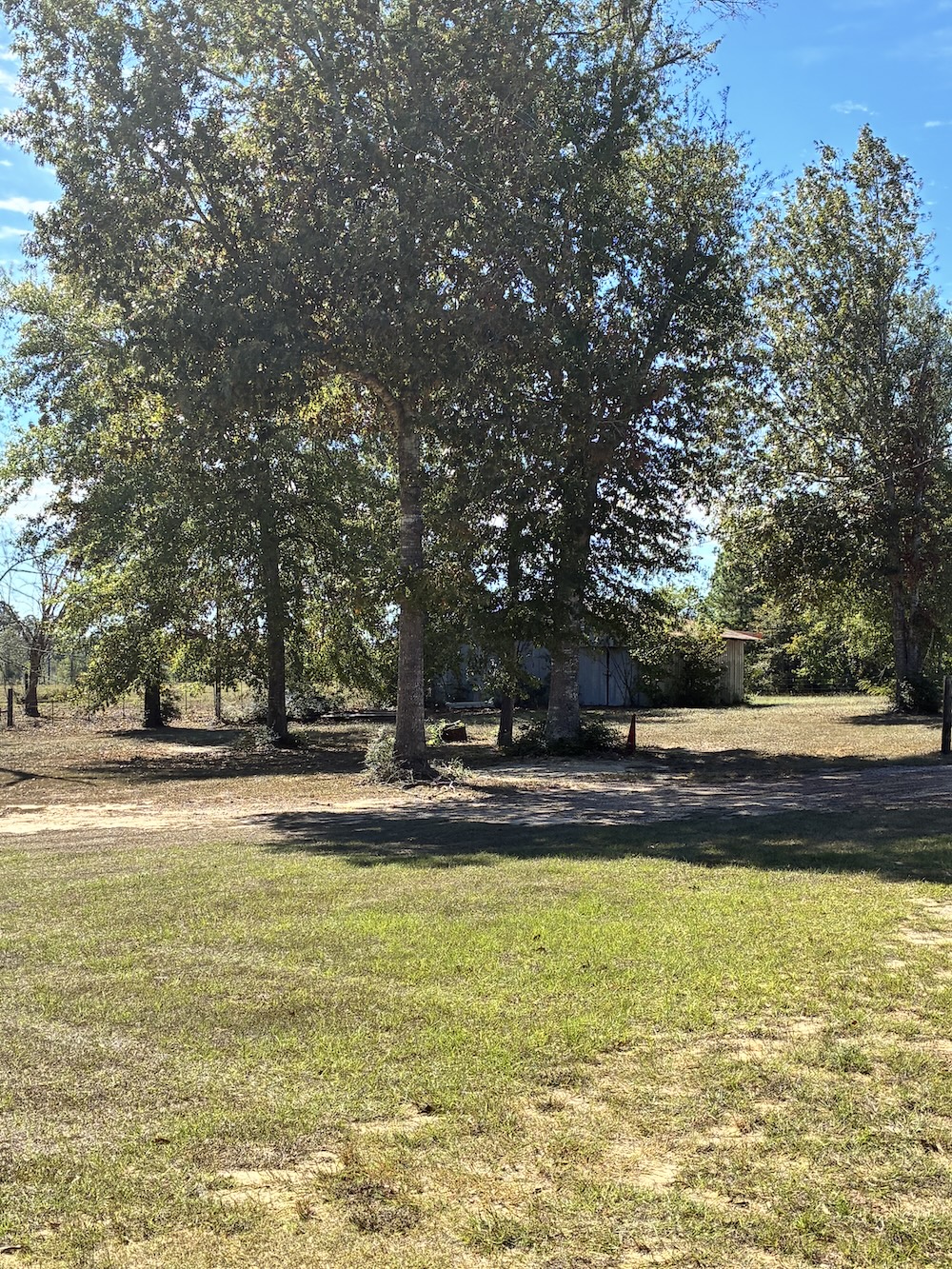
I jumped over the fallen oak and caught the first glimpse of the empty plot by the glow of the security light (or booger light, as we called it). I was struck with how small it all was. Without the house and the associated memories, it was just a small square of dirt, eighty by twenty feet. Just a few short hours before, it had been my childhood home. It was where David had tried to teach me to ride a goat, mutton bustin’ style. It was where I had watched Dad, emerge from his shower with wet hair slicked back, proclaim in a shrill raspy voice “I smell gooooooood!” before sitting down at the Macintosh computer Mom had bought on discount from the school to play Snood. It was where Mom and I met customers attracted by our ad in the East Texas Peddler for the Shih Tzus we bred.
The main things left on the premises were the two empty dog pens, a rotting hammock, and an overgrown gardening plot Dad had built for Mom to resemble a wishing well. I wondered if Dad would have built the thing had he known what Mom’s wishes would eventually bring.
The largest remaining feature was Dad’s carpentry shop, now just a large, rusting storage shed, another accessory to an old life that already seemed to belong to someone else. Decorative bottles hung from a cottonwood Mom called “The Sinning Tree.” She had gotten the idea from Grandma Evie, who hung whiskey bottles in the front yard because, while you shouldn’t be proud of them, you should own your sins, not fear who learned of them. As I looked from the tree back to where the house once stood, I wondered if the trailer would still be there if we had been as open about all our problems as Grandma Evie had been with her whiskey bottles.
None of us knew how to talk to one another about our feelings without getting violent. And that had killed the home that once stood here. I had certainly done my part in it all. As I turned to leave, I took one last look at the bare dirt rectangle, resting at the bottom of the incline crisscrossed with tree roots. There, where the trailer once stood, severed PVC pipes poked up like ribs from a shallow grave.
Brian Selman writes memoir and essays exploring family, identity, and memory. His childhood in Deep East Texas and adulthood abroad inform his work. He has appeared in South 85 Journal, Hare’s Paw, and The Esthetic Apostle. His memoir Through the Briars and Brambles was Highly Commended for the Bridport Prize.
Photograph courtesy of the author.